N-Type: The Story Behind the Sound
From Croydon record shops and pirate radio to FWD>>, DMZ and decades of dubplates, N-Type reflects on the people, places and instincts that shaped his journey through dubstep.
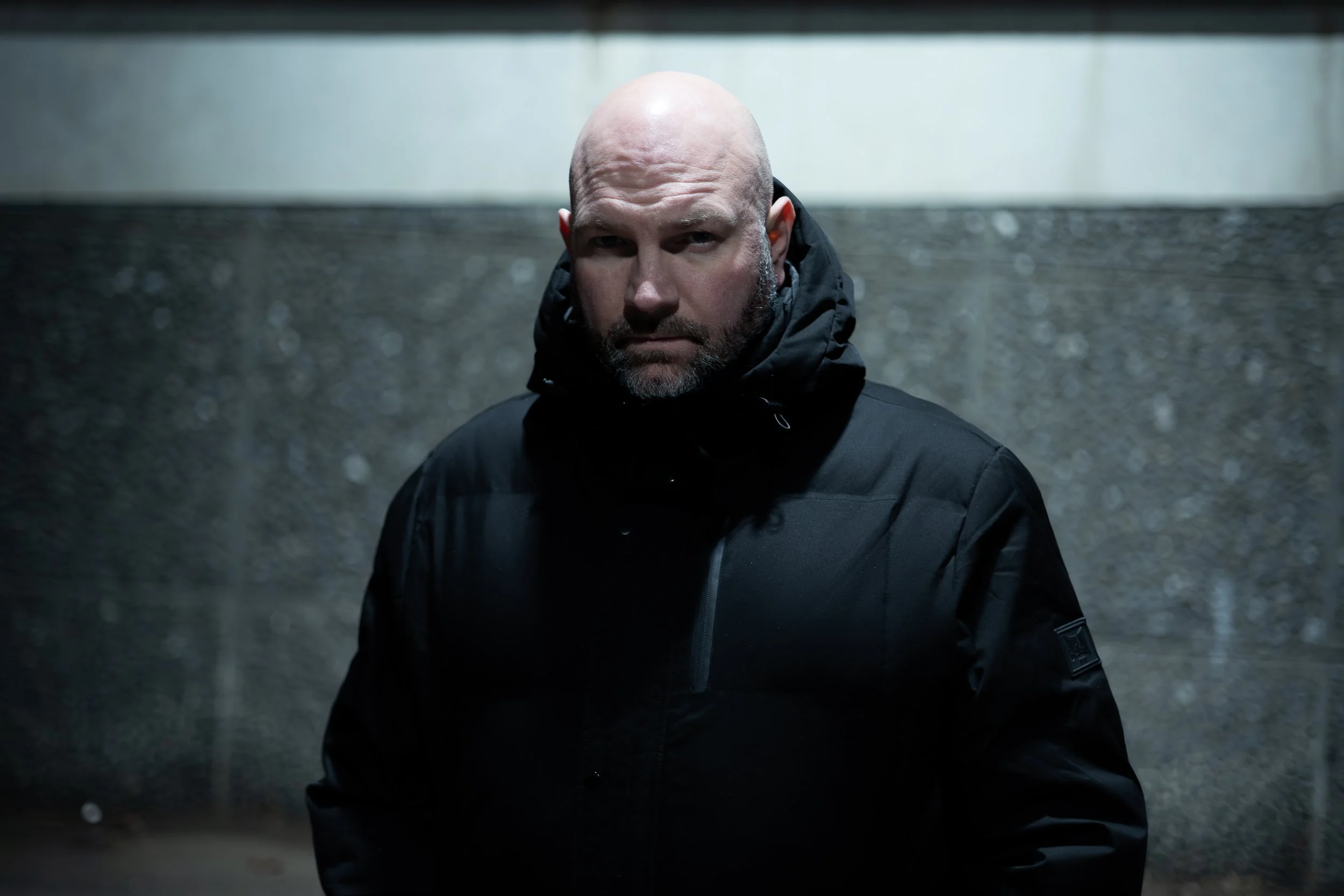
N-Type portrait, present day
Few DJs can speak on the birth and evolution of dubstep from the inside quite like N-Type. His story runs through Croydon, Big Apple Records, pirate radio, dubplates, FWD>>, DMZ, Wheel & Deal and a lifetime spent chasing the feeling that only music can give.
What comes through most in this conversation is not nostalgia for its own sake, but a deep connection to the culture that made him. Family, record shops, local link-ups, graphics, radio, exclusives, long nights and the simple love of a big tune .. it is all in there. We spoke to N-Type about the roots of his journey, the early days around Croydon, what DJing has given him, and why the underground still matters now more than ever.
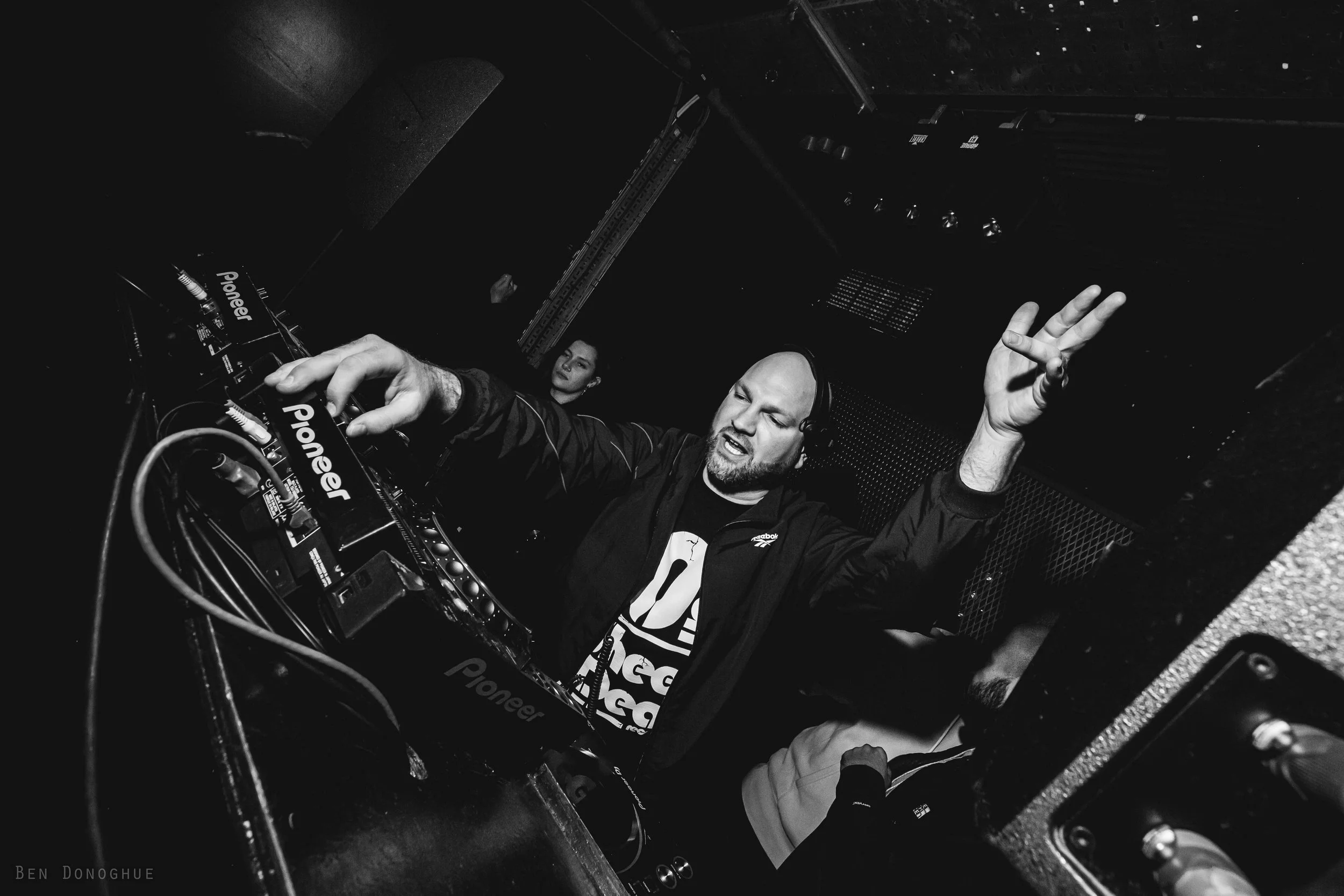
Dedication and craft
Origins .. before music
Talk us through where you grew up and what early life looked like before music entered the picture.
I grew up in Reigate, just south of Croydon, near Redhill, suburbia. I spent a lot of my early life playing football and basketball with my mates in the park and I was really into computer games, music from an early age. Being close to south London meant we could travel easily into the city on train and there were a lot of good record shops local.
Where are your family from originally, and what kind of environment did you grow up in?
So my Dad’s Dad was from Jamaica Road in Bermondsey, proper Cockney, and my nan was a farm girl from Cheshire. She moved to London to help with the war effort and this is when they met. They then moved to Croydon where my Dad and Uncle grew up. My uncle had a music shop (Potters Music) in Croydon and was a bow maker. He encouraged me to play instruments like guitar, piano but I never really clicked with it. My other uncle (my mum’s brother) was into more dance music and used to record me “mega mix” tapes from radio (chopping out the adverts to roll the music) and I got into doing that with cassettes. I liked the way you could choose the order of tracks and almost mix them. My uncles really influenced my interest in music from an early age.
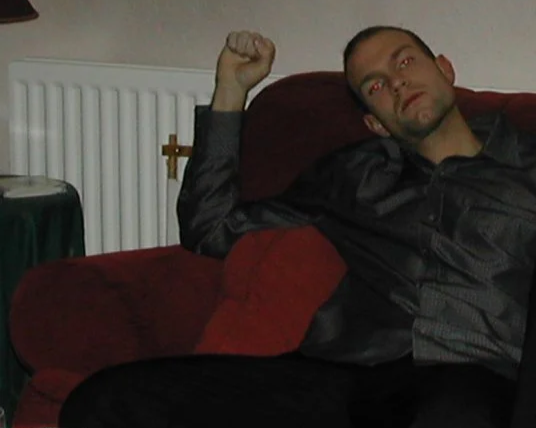
Young N-type
What kind of kid were you before records and clubs became central to your life?
Always up to something! A hundred miles an hour! lol I was always getting in trouble especially at school. I never really liked school, it felt like prison. I found it hard to focus and all I really wanted to do was music and creative stuff plus play basketball or computer with my mates. One thing I did like at school was the school radio we had at lunch. I used to play tunes for my mates and have a laugh on it. I got a faint memory I think I got banned in the end. Music and DJing definitely gave me a focus. Record buying was like a religion to me. Mad thing is after not liking school I actually ended up going to art college because I got A* for GCSE art and when I got into a proper creative atmosphere I loved it! I ended up doing a GNVQ, HND, A Level art and then went to Uni and got a BA Hons in Graphics. Once I received the help and encouragement I went on to love college and uni and at the time I didn’t realise that my graphics would help me get in places for my music career. It was meant to be! I ended up working for Rinse FM, Tempa (I did the art for Skreamizm 1 & 2), Dubpolice, Practise Hours, Dump Valve, Static Media, Skepta, Wheel & Deal .. the list goes on. Graphics opened doors for me.
When you look back now, were there early signs that music or culture was going to become your world?
Yes definitely, I was obsessed with it. It was like my calling in life. Listening to music was like meditation or medicine for me. As I said earlier I found it hard to focus but music got me locked in! I always found if music was playing whether it be in the background or upfront and loud I could zone in. I found I could think straight when life had a soundtrack. When I first started mixing on my friends’ decks it was one step further from the cassette tape “mega mix”, I could interact and make a melody out of two songs, this was my calling. I was always obsessed with how tracks were made, melody, harmony and lyrics but mixing vinyl and the skill that went with it was my addiction.
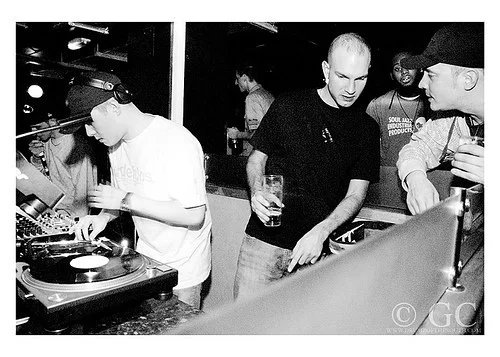
In the booth with Walshy
Finding music
Do you remember when music stopped being something you just listened to and started feeling like something you wanted to be part of?
As soon as I started mixing at my friend’s houses. I started buying more jungle records to mix on their decks. Once I got some second hand decks on my 14th birthday all I wanted to be was a DJ. I used to dream about the chance to play to a big crowd of people and I will never take it for granted.
What came first for you .. DJing, production, or simply collecting records?
In actual fact I started MCing first. This was when I was at school listening for jungle tapes. I loved MCs like Skibadee, Stevie Hyper D, Det, Shabba D etc and I was trying to do that kinda fast chatting style. As soon as I started mixing my interest went to DJ and stayed there (thank god, I don’t remember being that great lol), even though I still host and toast my sets on radio and dances to this day. Production came next off the back of wanting to play some of my own tunes in my mixes.
What did discovering records feel like at that time?
My mum and dad had records so I was used to seeing them about. My parents weren’t so into music though. What felt amazing was when I discovered record shops filled with jungle records I could only hear on the tape packs or radio and started washing cars to get money to buy them. I never forget getting exclusy test presses from Big Apple. Some were like gold dust. John used to save them for me and Walshy (RIP), we used to get gassed!
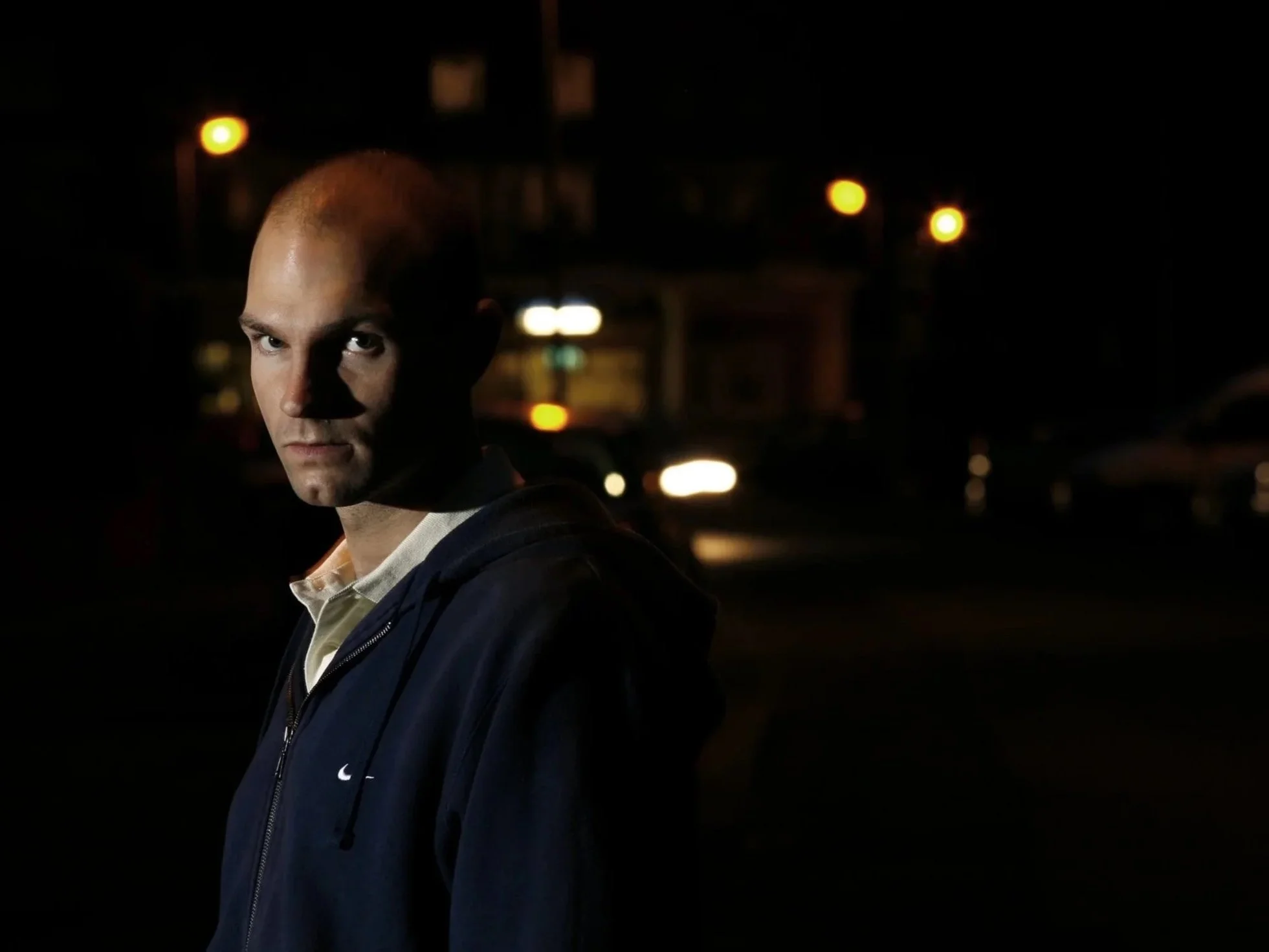
There from early
Croydon .. entering the scene
At what point did Croydon and that wider circle become part of your story?
My dad worked in Croydon and my uncle had the music shop so I was always up there. I used to hang around the record shops and meet other DJs. Then we started playing at local parties and clubs. We met loads of the dubstep family you know now from just going out in Croydon. Me and Walsh (RIP) were mates at school and we started making mixtapes together and eventually started selling CDs in the record shops. John at Big Apple liked the tapes and asked us to represent the shop on a local station in Merstham. Later he introduced us to Delight FM and we started doing the drivetime show, 4–6pm in the week.
Tell us about Big Apple Records from your perspective. What made that place special beyond just being a shop?
It felt like home, a place we could meet up, share music and get exclusy test pressings from under the counter. There was a buzz down there and was my favourite record shop. My favourite era was when Hijak, John, Artwork, Hatcha, Danny, John Dad etc was working down there. The Big Apple Christmas doos were legendary! I miss that place, I remember when they closed down me and Walshy was so gutted. Amazing times!
Do you remember your first encounters with people like Mala, Coki or Plastician?
Yes. Mala was a garage MC at the time and worked in clothes shop in Croydon. Coki I met a bit later at Apple I think. Plastician I met early doors. He was out and about a lot in Croydon with his mates, he was working for a record distro at the time and he gave me a CD with some of his earliest grime tracks on there. I was first to play Venom and Shockwave on my radio show on Delight FM. Slimzee heard them and signed them after that. There was a bunch of us who were local friends. Walsh I met at secondary school and we were some of the only DJs at school at the time. He got me more into garage as at the time I was playing jungle & DnB. When we started our first radio show half the show was jungle and DnB and the other half garage. He introduced me to people at Big Apple as I was mainly buying records from Wax City and Rewind. The local dubsteppers were pretty much some of the biggest names in the scene .. Chefal, Plastician, Benga, Skream, Hatcha, Hijak, Kromestar, Horsepower, Sgt Pokes, Loefah, Mala, Coki, Cyrus, Distance, Darkside, Fresh & Steady, Beezy, Crazy D, Easyrider (R.I.P), DFuse, Artwork, Kutz and Surge (if I’ve forgotten anyone I’m sorry) .. we all lived within a few miles of each other, EL B and Raggs didn't live far away either they were Brixton way.
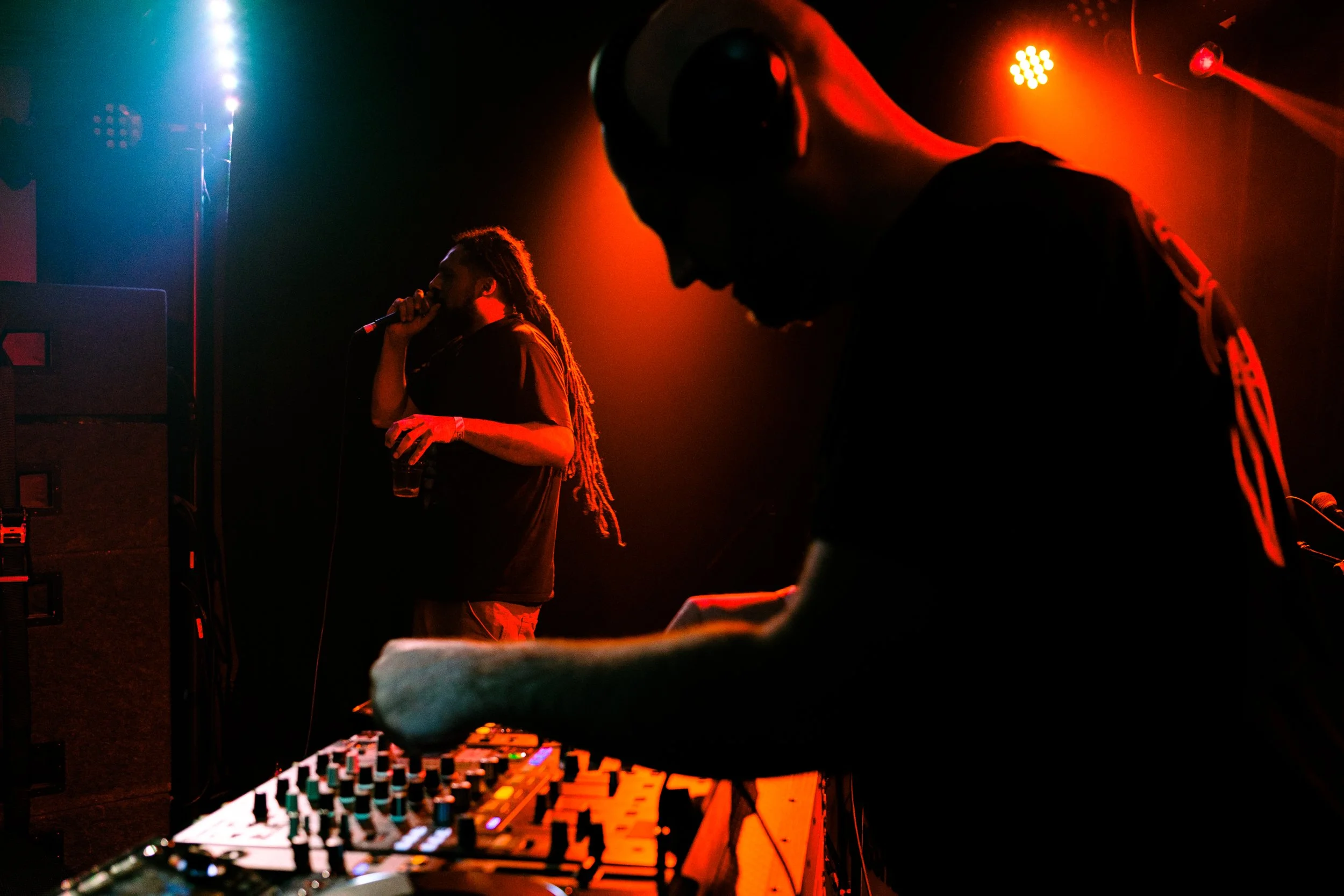
On set with SGT Pokes
Before anyone realised what was forming, what did those early link ups and nights actually feel like?
It felt fresh! You would hear so much ground breaking music in one night. The creativity levels were through the roof. We all loved garage or jungle, DnB. Most of the cats I met from Apple were garage heads but were doing garage different. I gotta big up El B, Oris Jay, Zed Bias, Zinc, Steve Gurley, Mark One, Artwork, Horsepower, Slaughter Mob, to name a few. They really took garage in a new direction, and the breakstep stuff like Search & Destroy, Dub Child, Hype, Chase & Status, Hi Grade are some of the main roots of dubstep. They kicked it off first. Then Benga & Skream & Digital Mystikz & Loefah, Kromestar came through with the distinctive dubstep sound. It was an amazing time and a real melting pot of influences and creativity.
Do you think being slightly removed from central London allowed something more independent to grow?
I mean dark garage was from all over but I think Croydon definitely had a sound. I think it’s because we all hanged about together and Big Apple. Hatcha crafted a signature DJ sound from early. He was the main DJ playing solely dark garage proto dubstep. He defo influenced the sound. I was still playing quite a mixed set at that time. You can hear some of my old sets on my SoundCloud.
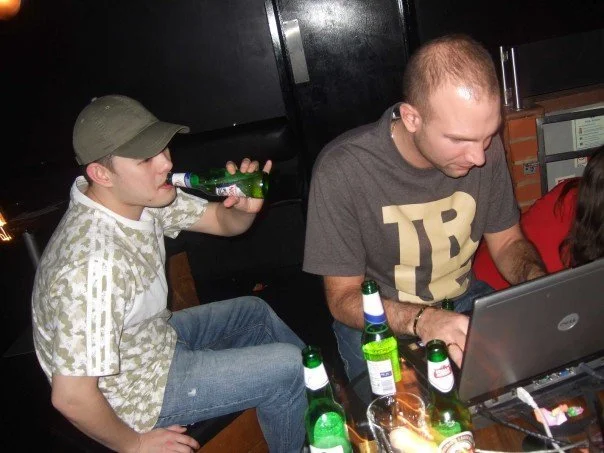
Moments in time, always digging
People and moments
What were the personalities like around that time?
A bunch of rogues and skaliwags! lol To be honest I think the dubstep scene had a lot of personality, even the sound of each of the different producers was very pronounced. Everyone had their own vibe, but all the same family.
Was there a moment where you realised something important was happening culturally?
FWD>> .. it was basically the night we were waiting for that brought all the fresh dark 2-step garage / dubstep sounds together in sick club with a fat soundsystem. Velvet Rooms was also up town so it kinda felt special.
Looking back now, what details from that era stay with you the most?
Some of the first time I heard certain tracks. I remember where I was standing in the room and how the tracks dropped. Plastic People soundsystem was amazing. That was one of my favourite clubs of all time .. it felt like home.
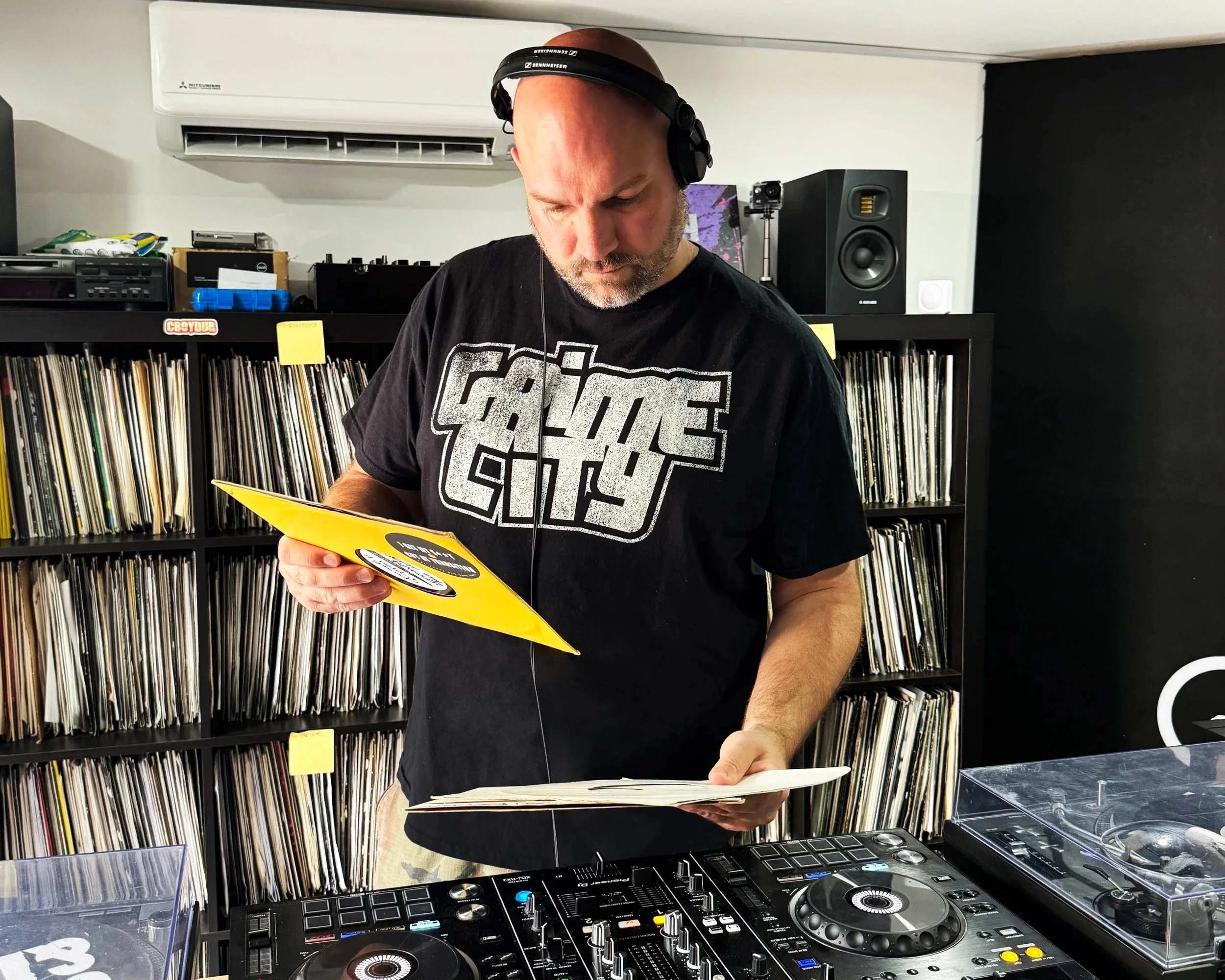
A collection that spans back to ‘94
The DJ
What has DJing given you over the years that nothing else really could?
Interaction with music and not just my own music but other people’s. Understanding of keys, quantisation, syncopation, rhythm, groove, EQing, emotional experiences, but also control of emotion and the most amazing natural buzz!
When a set truly locks in, what does that feel like mentally?
In the zone, completely at one with the music playing, lost in the vibe. Like a meditative state!
Has your relationship with DJing changed as you’ve gotten older?
I don’t think I mix as quick as I used to, think that might be as I’ve calmed down in my older age but in general I think my mixing is better and more considered. My relationship with DJing has stayed the same though. I love it!
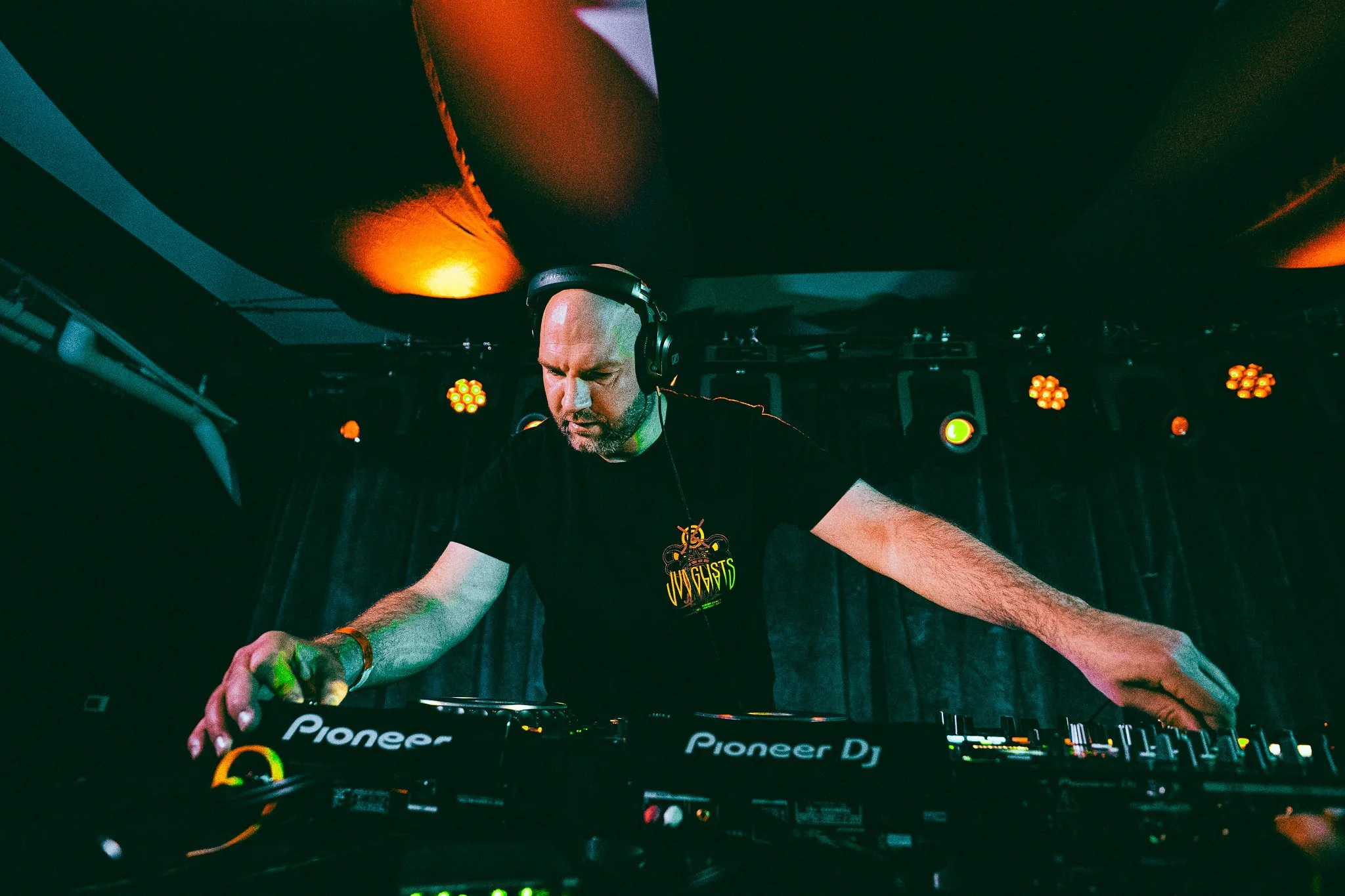
The art of selection and mixing
Records and dubplates
Tell us about your record collection and how it grew over time.
My record collection goes back to around 1994 with a few old hardcore bits from 1992/3 that I picked up along the way. The bulk of my collection is dubstep / grime & garage as I didn’t have much money to buy jungle and DnB when I was younger but I still have a wicked selection.
Is there a record or dubplate that holds particular meaning for you personally?
All my dubplates do, they have a special place in my heart. I love the whole process of dubplates. Getting the music on DAT or CD, taking them to get cut to plate at a cutting house. I spent hours sitting with Jason chatting and listening to the mastering process. I spent more time cutting plates than I did in a record shop. At one point I was cutting 5–10 dubplates a week (I had a decent graphics job funding it I might add). I have hundreds at home, 10 & 12 inch dubplates. I still cut dubplates to this day.
What did digging represent back then compared to how music moves now?
I miss the vinyl days, but there are pros and cons. Now I can make a beat in the hotel and have a playable master to test in the club in the same day, rather than make it and send to cut. I miss the whole process and it’s nice to have a physical vinyl to hold on to. My vinyl and dubs are like memories on wax .. I remember a lot of experiences through them.
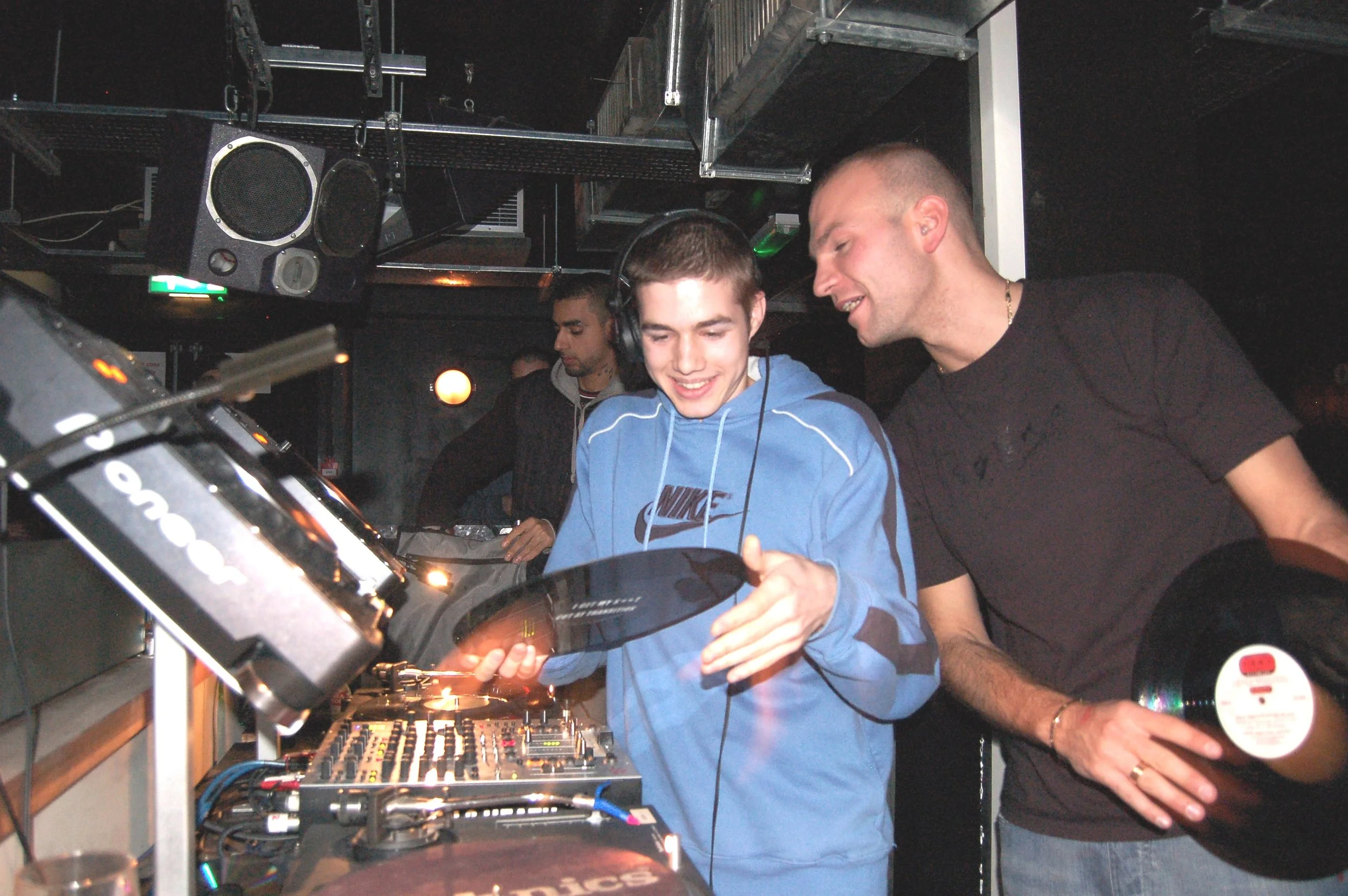
Comparing cuts
Wheel & Deal
What pushed you to start Wheel & Deal?
I actually already had a label called Terrain Records that released some of my early stuff. I did it as my final major project at Uni and my boss at the time helped fund it for me. He wanted to get more involved, take the label more the house route but I just wanted to keep it underground and stick to dubstep & grime so I put on a back burner until 2009 when I got signed up to an agency called Echolocation. I was the first dubstep DJ to join the drum n bass agency. Obi my agent encouraged me to start the label up again so I chose to do something fresh .. Wheel & Deal was born.
What has running a label taught you about music and about people?
Each release is special and should be treated that way. People’s art deserves respect and has to be handled in the right way as if it was my own. I love to work close with artists to encourage and create. I’m very hands on with the label, I want things done a certain way, treat people as you want to be treated. Also get a good team together. This helps spread the load if things are getting busy. I have to big up Matt Bayfield .. his input in the videography and advertising over the years has been monumental for us, I wouldn’t have been able to do some of things I have without him.
What still makes you excited when you hear new music today?
Big tunes! Creativity! Something different, production levels, skills on the decks! I love scratching, I practise myself but I’m not that good. I love seeing people tear it up on the decks.
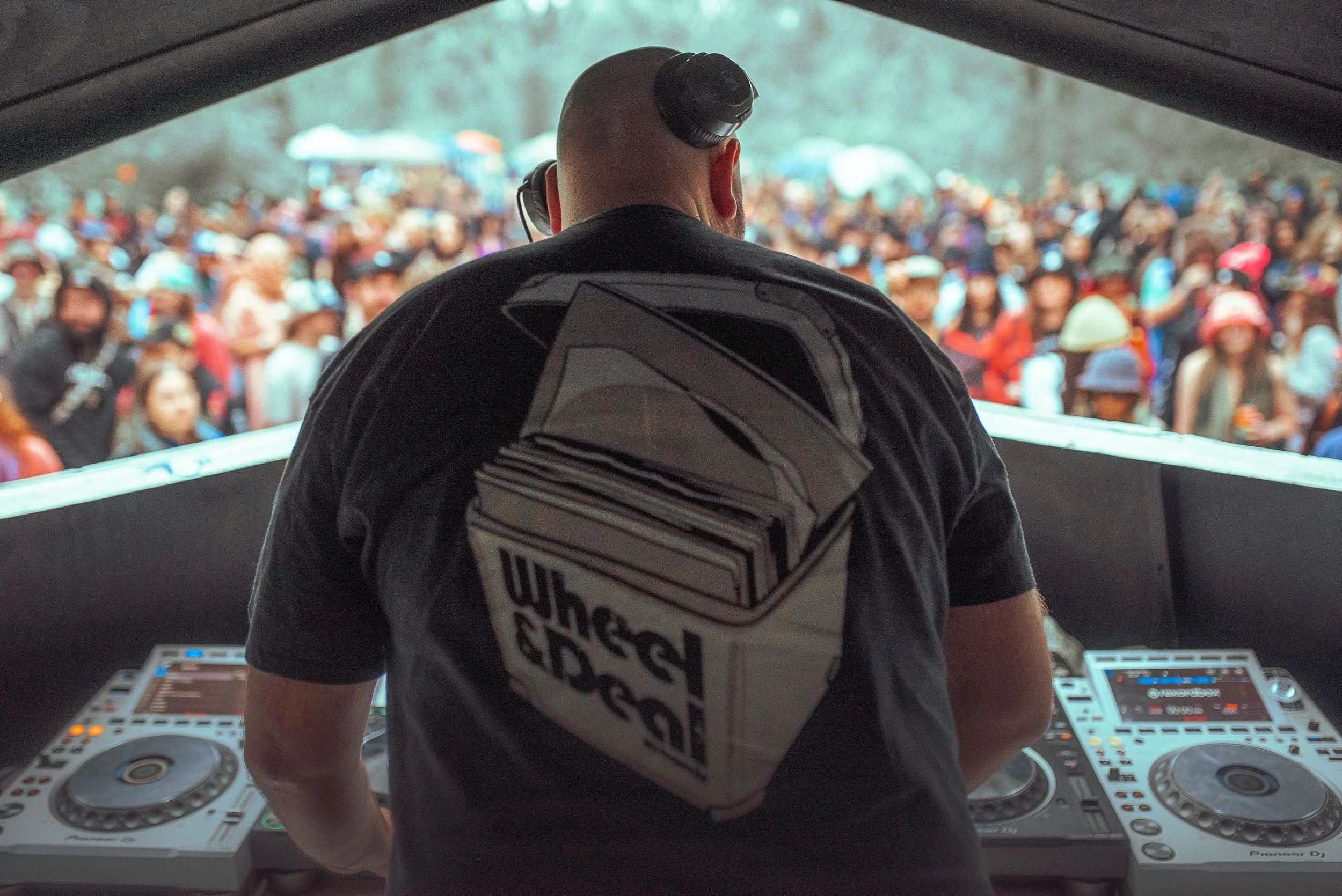
Wheel & Deal
Time and change
You’ve seen multiple eras of the scene come and go. Were there moments where you questioned continuing?
I will never give up on my music, it’s my life, I live for it! Even in quieter times I’ll go out and earn money elsewhere to fund it. Music isn’t about money to me, it is my soul, my personality, my art and with that comes highs and lows. A point that I found harder (and eye opening) was when I was starting to get bigger and play at big DnB raves and festivals, the busiest time in my career and supposed to be the happiest, but the haters kicked in. For me music was a positive thing, a celebration and to start getting hate was a strange thing for me, it gave me a bad taste. My heart and soul went into every DJ set and every track that I did and to have people throwing unproved negativity on that felt weird but again all things happen for a reason and it hardened me to it, basically it taught me not to give two fucks about what people say if you believe in yourself and what you’re doing. The hate makes you great as they say?!
How did you navigate periods where the culture or industry shifted around you?
I’ve always done me, I’m open to new trends of sound and new creativity, I embrace that so I move with the times but I never lose who I am and what I’m about, that stays the same.
What has kept your connection to music intact all this time?
It’s part of me, I can’t live without it. Listening to music, making new sounds, being lost in the moment, the medicinal side of it. It’s literally what makes me tick. I can’t imagine life without it. I love hearing new music, I’m known for dubstep but I don’t just listen to that.
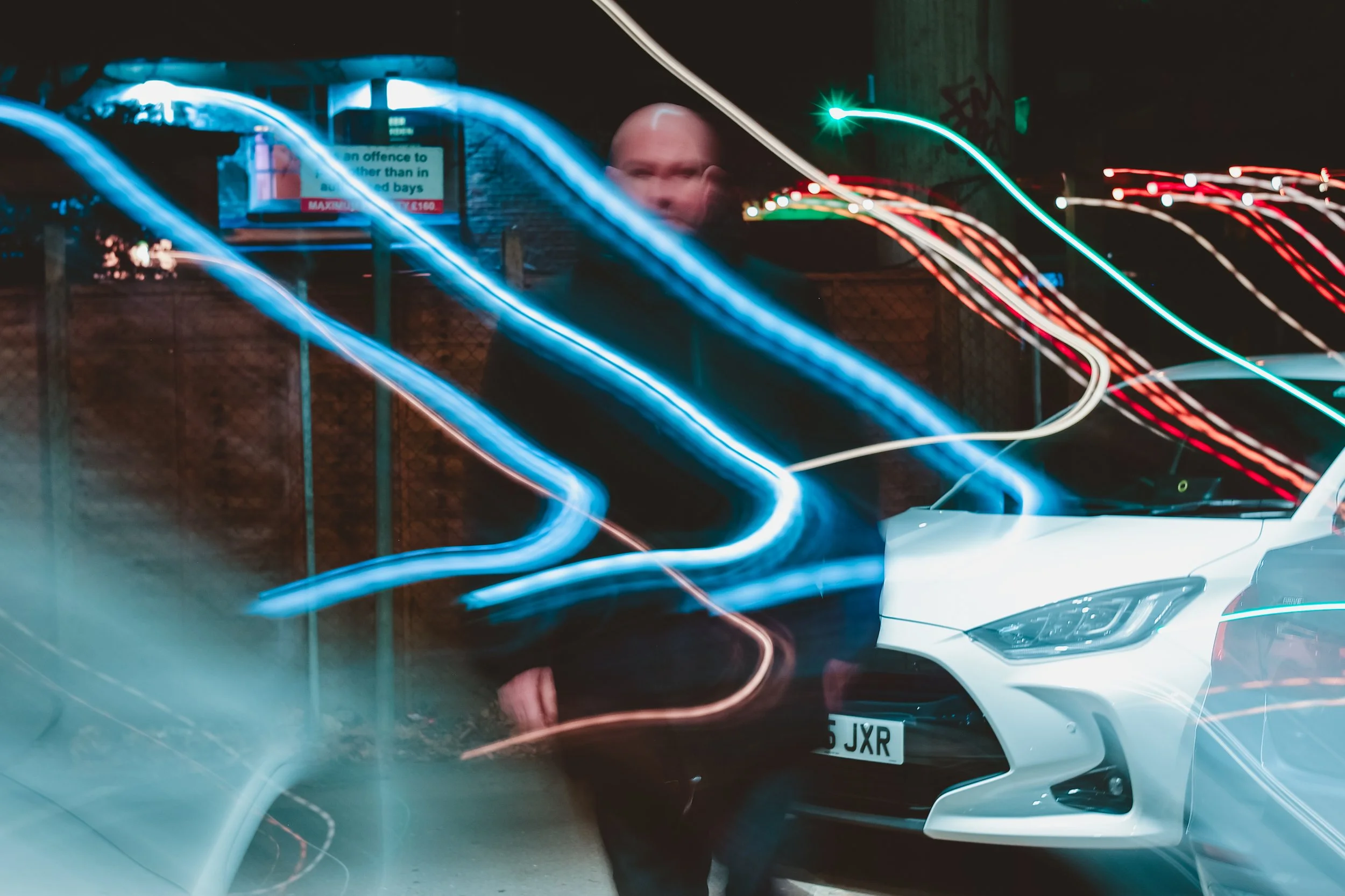
Behind the lights
Present day
How does stepping into clubs today compare emotionally to the early years?
The vibe in clubs has changed. Back in the day it felt more raw and unexplored. It doesn’t mean that vibe doesn’t exist though .. there are promoters and clubs pushing that vibe. Less of the phones and more of those sweaty euphoria moments and bass face drops. Since Covid people seem to rave earlier, day raves are more popular. I like a day rave but I also liked stumbling out at dance at 6am on a different planet.
What still excites you when preparing for a set now?
Banging new dubs that no one else has. Ideas for mixes that might drop well. If I’m doing vinyl sets, digging into my unreleased selection of plates that no one has. Pulling out tracks I haven’t heard in years. Rare vinyl! Fucking love it mate!
What do younger DJs sometimes misunderstand about longevity?
I’ve got respect for the youngers coming up, they keep the rave scene alive. It’s them out there every week having it up. I’m 44, some of my mates hardly go out now. One thing I think is a concern is how people consume media now. The flick culture has shortened the life of tracks, people seem to be on to the next thing within a couple of weeks and I think a lot of people want success overnight. I have seen some people quit quite early in their career as they haven’t got to the level they perceive themselves to be at. I think social media gives false promises, don’t look at it too much, just concentrate on solidifying your foundation and believe in what you’re doing. If you’re in it for the right reasons you will reap the rewards. Longevity over a quick buck any day and quality over quantity.
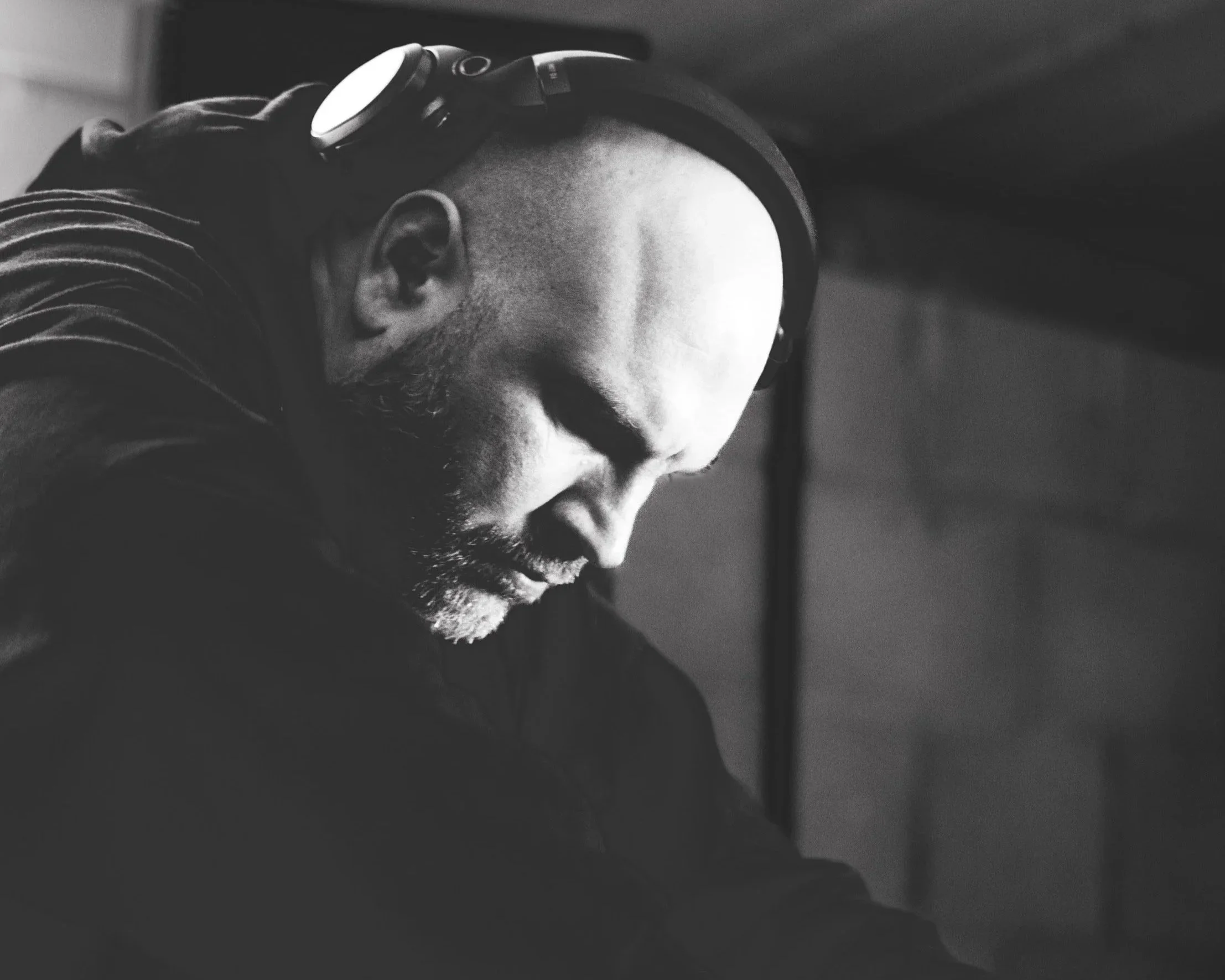
Locked in
Life away from music
Who are you when the music stops?
What you see is what you get really but my everyday life is Daddy. I have a 2 year old and I love spending most of my time with her and my family when I’m not working. She is talking a lot now so we sing songs and she loves music!
What keeps you grounded outside of clubs and touring?
Family life, my daughter got me out of bad habits. She doesn’t know that, but she really got me on the healthy route. I still love to party but I value my family time so much.
What does a perfect day look like when you’re not working?
Bit of a lay in, nice breakfast. Maybe jump on the lappy to start a beat idea. Go for a country walk that ends up at a pub. Have a few ales then walk home to get some dinner. Maybe a sick takeaway. Have a natter with Chefal on the phone. Bang on a film for my daughter and melt into the sofa. Maybe have a nap lol rah I’m a proper old man init but most of the time my life is 100 mile an hour so I really appreciate the down time and simple things.
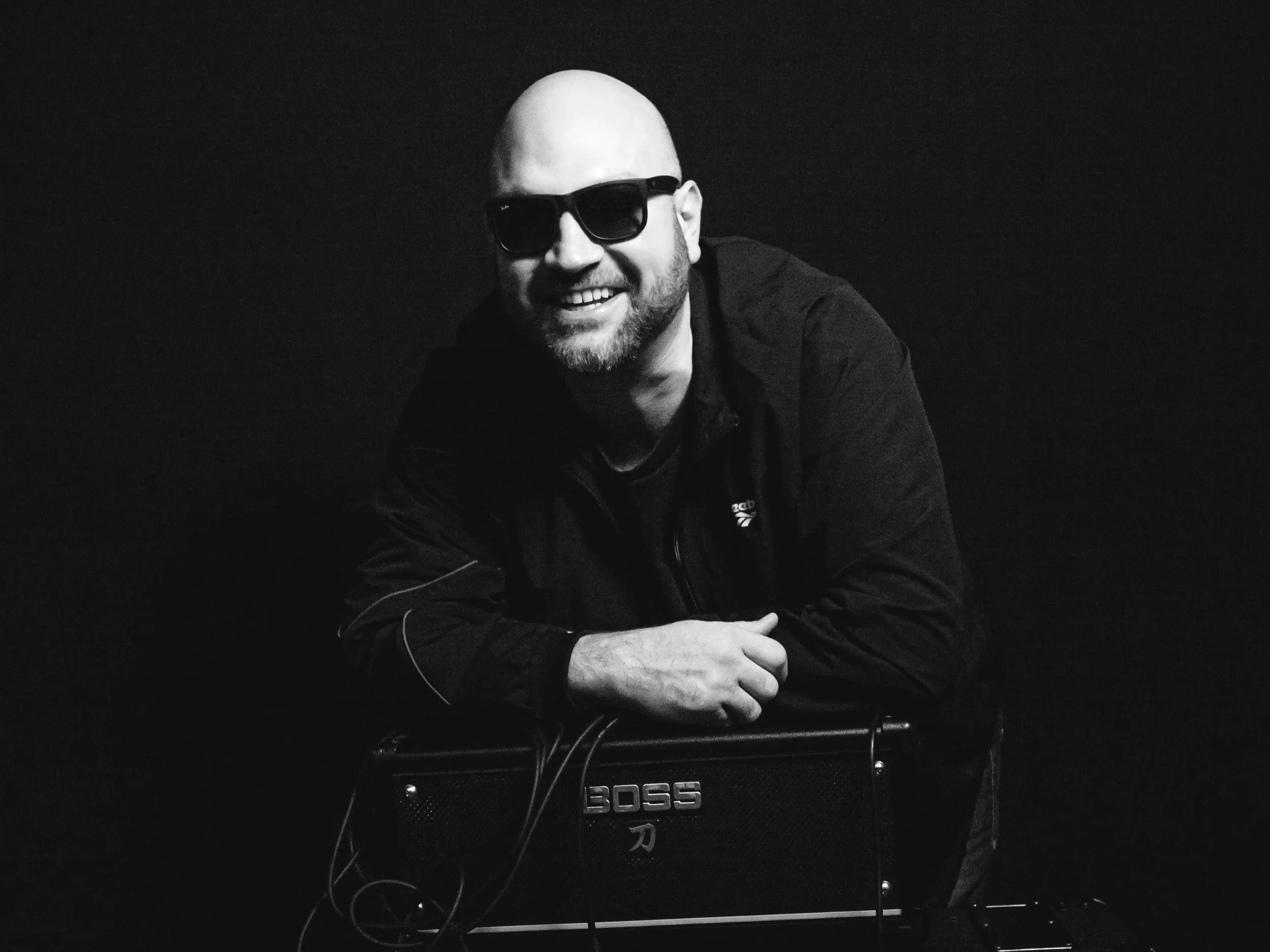
N-Type .. contributions to the art
Reflection
When you look back across everything, which moments feel most vivid now?
I’d say the birth of the dubstep scene, being taken from bedroom DJ to playing all over the world. Seeing places I never thought I’d see. FWD>> and DMZ were some of my favourite sets of all time. Mixing Dubstep Allstars for Tempa was a highlight, it catapulted my career and I played some of the biggest gigs after that. Kicking off Wheel & Deal and running some rammed events. Outlook Festival from the beginning till now .. one of my favourite festivals in the world. It’s like a big holiday with my mates. Dropping my album Typography in 2025 and touring Australia and NZ with Youngsta was one of my favourites of all time, classic business! Absolute carnage and sold out events! I love touring America, Japan and Asia also and have made good friends along the way. I don’t take any of it for granted, I have been so lucky.
What do you feel when you think about those early years today?
Grateful, we had such an amazing time. I made friends along the way that I can call family. Yes there are things I miss but at the same time I think I’m grown now. I know who I am, what I like and live a healthier life. Musically there is still so much to do and so many avenues to explore.
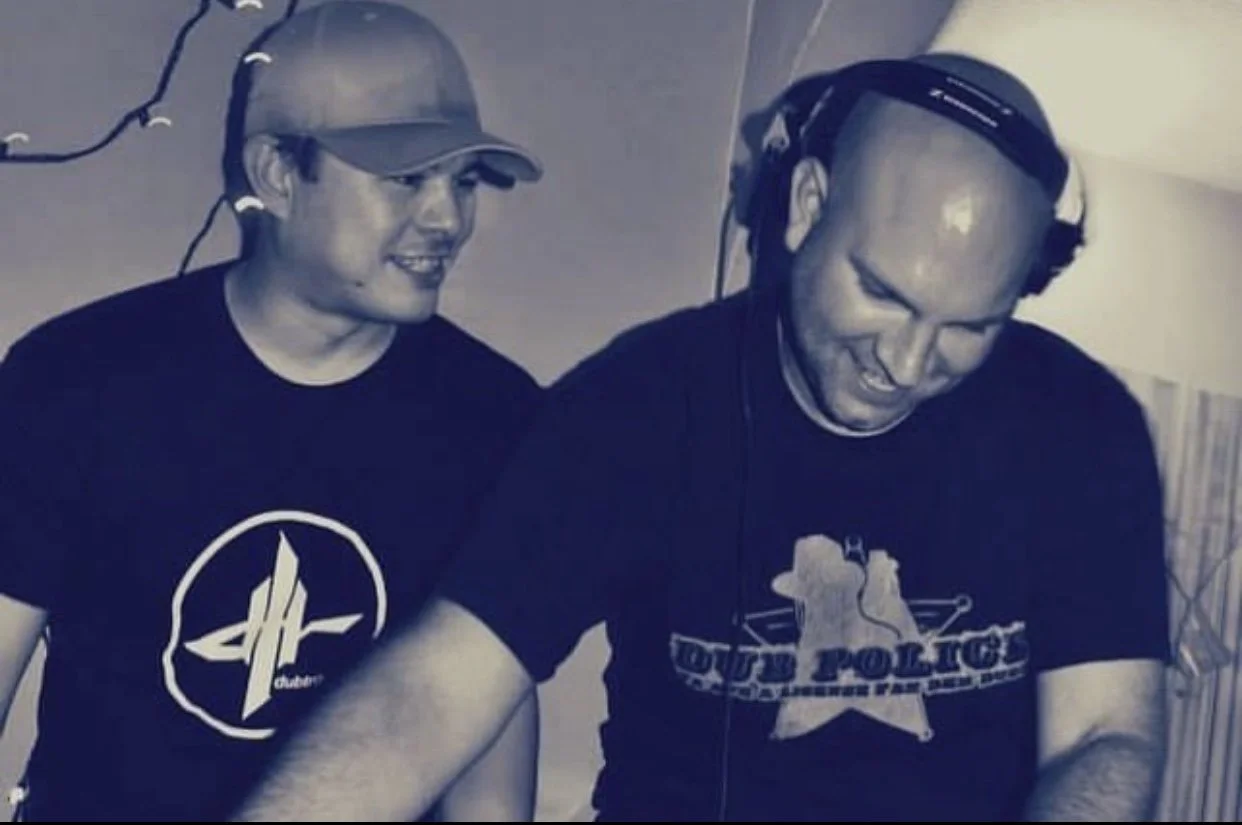
Good times
Closing
If someone discovered your story for the first time now, what would you want them to understand about this culture?
The underground is where it’s at! The best music comes from the heart and you don’t need to spend a million pound getting the best results, the idea is the most important thing. The love, the dedication and drive to improve and develop your sound is paramount. You don’t have to be Beethoven to make something creative and groundbreaking .. sometimes the limitations in tech or musical knowledge can be a good thing and make you think outside the box. Never limit yourself! Music is infinite!
Some stories aren’t defined by one breakthrough moment .. they’re shaped over time, through contribution, consistency and being present in the right spaces.
N-Type’s journey is a reminder that what happens around the music often matters just as much as the music itself.
The people you meet, the roles you play, the decisions you make early on .. they all carry forward.
This is what it looks like when everything connects.
