Ten years ago, Alix Perez launched 1985 Music with an idea that went beyond releasing his own records. He wanted to build a platform for artists, bringing music and visual design together under a distinct creative identity.
Since its first release, Elephant Dreams, in 2016, the label has grown into an international operation encompassing records, clothing and events. Along the way, it has introduced new artists, developed lasting relationships and established an identity that remains recognisable across everything it produces.
Behind that growth is a remarkably small team, with Alix continuing to oversee much of the label's musical and visual direction himself. His own journey has taken him from Belgium to the UK and eventually New Zealand, with each chapter influencing how he approaches his work.
For the final part of Conduct's three-part series, we speak with Alix in a rare extended interview about the beginnings of 1985, the decisions behind its development, his relationship with the artists, the importance of design and the experiences that have shaped him along the way.
Firstly, congratulations. 10 years of 1985. You've built something that sits consistently at the forefront of the culture we love. Does it feel like a decade to you?
In some ways yes and in others not at all. When I think about it, the approach to running the label hasn't really changed much since its inception. I treat each release much the same now in 2026, as I did in 2016. The vision remains: pursuing sonic and visual composure. The focus has never shifted away from the music and the art that accompanies it. Of course, the landscape always changes but we adapt and continue to put our energy where it matters.
Going back to the first release on the label, Elephant Dreams… did you have a long term plan at that point? Did you ever really envision being 10 years into it?
From the beginning, I had the intention to build something bigger than an outlet for my own music. My hope has been to provide a good platform for emerging artists, to grow together. A platform that really puts importance on the arts first and foremost. Throughout my own career I've had good and bad experiences with record labels. I often didn't completely feel aligned with their vision. With 1985 I've always strived to iron out creases and build meaningful, personal relationships with the artists. Having your own platform gives you much more control, it's challenging and rewarding at the same time but the result is much more personal.
June 2016 was a mad time. It was the same month the UK voted to leave the EU and everything felt a bit all over the place. Since then you've moved to New Zealand and a lot's changed… how do you look back on that period now?
I think we can all agree that Brexit was a massive faux pas. Being Belgian myself and an immigrant in England, it was a strange feeling. Regardless, I love the UK and it's played a major role in what I am doing now. Living in Devon at first, then moving to London for university was such an amazing period of my life. Fast forward to 2016, it felt exciting, regardless of the political landscape.
I never intended to make music my career path, or let's say a "job". All I knew is that I wanted to play records and eventually make and play my own records. When the time came, the label thing felt very natural and intentional. I waited a while until I felt it like the right time to take something on like that. I came to a crossroads of some sort. I'd gotten to the point where I felt like I established myself as an artist and it felt like this was the next step for me. I just hoped that people would follow and enjoy this new venture.
Moving to New Zealand has taught me to slow down and recalibrate. Being so distant from everything has given me more clarity and forced me to trust my own instincts and process. I did worry about the disconnection, that perhaps being so far from the source I would lose touch but in fact it has been the opposite. At least I think so.
1985 has become a real organisation covering the label, merch, events and more. How are you able to keep everything running as cohesively as it does?
There are days that can be overwhelming whilst running the label. There's a lot of responsibility as a curator and platform that looks after artists. It takes a lot more of my time than I'd like to sometimes but we have a small efficient team. My wife is now full time manager at 1985 and everything is very streamlined. We're both very organised and work ahead. At the moment the release schedule is locked in a good year ahead of time.
As much as I'd like to delegate and outsource more creative tasks to other professionals, I feel that I have a very specific vision and that it ends up being quicker if I take the reins. However this does mean more workload in general.
The time difference being in NZ does make things a little trickier but again we adapt and make it work. With events, we work with great promoters who often take care of that side of things. I provide the artwork and curation.
It's clearly much more than just a label at this point, how would you describe it in your own words?
I guess in a way it's our own visual/audio language. A developing story that morphs as it grows. But technically it's a creative platform. It's an outlet for creativity. Music, Art, Graphics, Fashion.
One thing about 1985 is the consistency and the loyalty in the roster. I've said before as an artist it's probably the best label to work with professionally across all aspects. What do you think new labels can learn from what you're doing?
That's always nice to hear. I don't think there's a set way or rule book to running a label. I do believe that the creative side of things is super important but the business side is equally crucial. If you have both sides locked in then you should be operating smoothly. I've always shone a light on the importance of paying artists in a timely manner and being available to lend a thought on direction or just life. At the end of the day we're all friends at the label. I always like to meet new artists before really committing to working together closely. Making sure that we align in our ethos and approach to co existence.
I do think it's also important to be honest with feedback. I'm yes or no when it comes to demos. I'm always happy to have some creative input but generally I know straight away if I want to sign a track or not. Often, it will be the tracks that artists don't expect. I encourage everyone at the label to be experimental and have fun.
Early days you were putting music out on other imprints… was there a moment that pushed you towards self releasing? Or was that always the plan?
I got to a point where I was lucky to have worked and released with various labels that I looked up to for a long time. Notably Exit, Soul:R and so on. I felt like I'd ticked a lot of boxes in that sense. The next natural step was to start building my own outlet.
What do you look for in music when you're signing records?
Authenticity, may that be something quirky or odd. I look for new artists with a sound, an edge. Something that sounds like them but also fits the label's sonic characteristics.
With how established the label is now, are you still actively out searching for music or does most of it come to you at this point?
I do, I just recently spent an entire day checking demos. In all honesty it can be challenging and I may not find anything in those demos that I'd like to release. However, there might be that one person with potential that I would keep an eye on and potentially work with down the line.
Sometimes, some of it does come to me via other artists on the label. That's the beauty of building a group of people that share the same interests.
You've always moved across tempos and styles but the 1985 sound is clearly defined. Is that something you're conscious of or does it happen naturally?
I think that naturally, your taste becomes your identity. Mine is specific and I believe that it translates in what 1985 has become. As some of the artists on 1985 know and much to their frustration at times, I'm very picky when it comes to signing music. I think it's so important to place utmost significance on quality control. Especially in an age where the volume of music is insane.
Are there any releases on the label that stand out to you personally… not in terms of numbers but moments where something shifted or clicked for you?
Definitely. I have a soft spot for the VAs. To me, they're the richest in variety and allow the label to grow sonically. I feel that my first Dubstep revisitation (Last Rites EP) sparked a shift in the label. It grew another branch that is now currently again sprouting off into new directions. Artists on the label started experimenting themselves and it has resulted in some cool releases. The Drone LP, Broken Home, Visages' Dark Guru EP, Fracture's releases, SHADES, For a Vein LP. They're all quite different records.
Running a label, building a brand, touring… it's a lot. Do you ever find it overwhelming?
Absolutely. With touring, I take extended breaks nowadays. I used to be constantly on the road but I've decided to slow it down. That way I have larger chunks of time where I can be home, be a husband, be creative, focus on the label and build the hunger to be playing shows again. Being on the road is a full time job in itself, I don't think everybody realises how taxing it can be.
Do you get much time to yourself and how do you keep your own health and wellbeing in check with everything going on?
I stay active a lot. I find exercise vital for my mental health. I keep my routine whilst on the road too, however challenging that might be. It's become a daily part of my life. Outside of music, I've been reading a lot again, finding things that inspire my creative itch.
I think people would be surprised if they realised how small the team is behind the label, yet the impact is international. Do you ever take a step back and look at what you've built or is it just one release at a time?
There have been times when I've actually taken the time to take a step back and appreciate how far the label has come over the last 10 years. Generally speaking though, I'm mainly focussed on signing music, forthcoming releases and design. It's easy to feel like you're ahead of schedule and become complacent so I try to remain productive throughout the year. Nikola, my wife and label manager has the same approach. She is super proactive and doing amazing work at 1985. The core of the label is basically run by us. The rest is distribution, manufacturing and so on, which is outsourced. The team generally has been 2 to 3 people since the beginning. I have to give praise to Matt Ryan and Pravin Muhki who were there from the beginning and helped a great deal in setting up and getting the label going in its first 4/5 years. We also worked with Amy Jayne who is brilliant and helped us greatly in getting to our current setup.
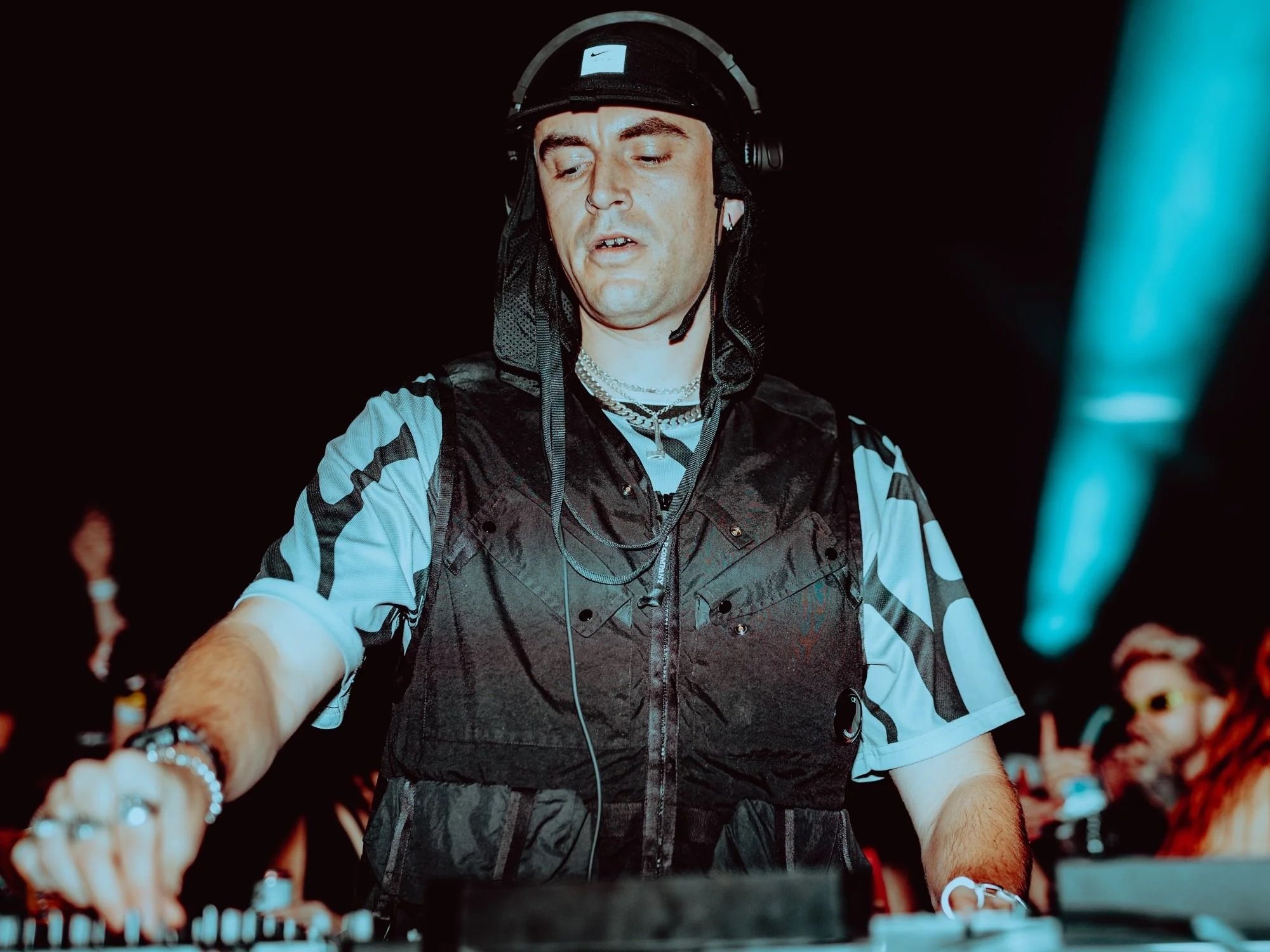
There's a lot of people a bit disillusioned with music right now… do you still have faith in where things are going?
It's easy to live in nostalgia. I fantasise about the pre social media era often. But as I mentioned, there are lots of exciting things going on out there, you just have to search for it.
I know you've always had a special love for Manchester in particular. What is it about the city that you rate?
First and foremost the people. I feel at ease and connected with Mancunians. There's a charm about it, I feel like people are real there, you know? Secondly, there's so much inspiring talent coming out of that city, it has a special kind of energy. I've spent a lot of time there over the years and feel like it's a second home when I pass through. From the early days of Hit & Run, working with Marcus, playing lots of shows and often spending extra time to connect with people. I've got a lot of fond memories.
We spoke recently about the Roundhouse show when your Mum joined you on stage. You expressed how much of an important moment that was. She must have been incredibly proud seeing what you've built?
That was a really big moment for us both. She's the main reason and influence behind what I do in music. From learning to mix her jungle and techno records, experiencing my first festival with her and then years down the line playing such a venue was monumental. It's hard to put into words.
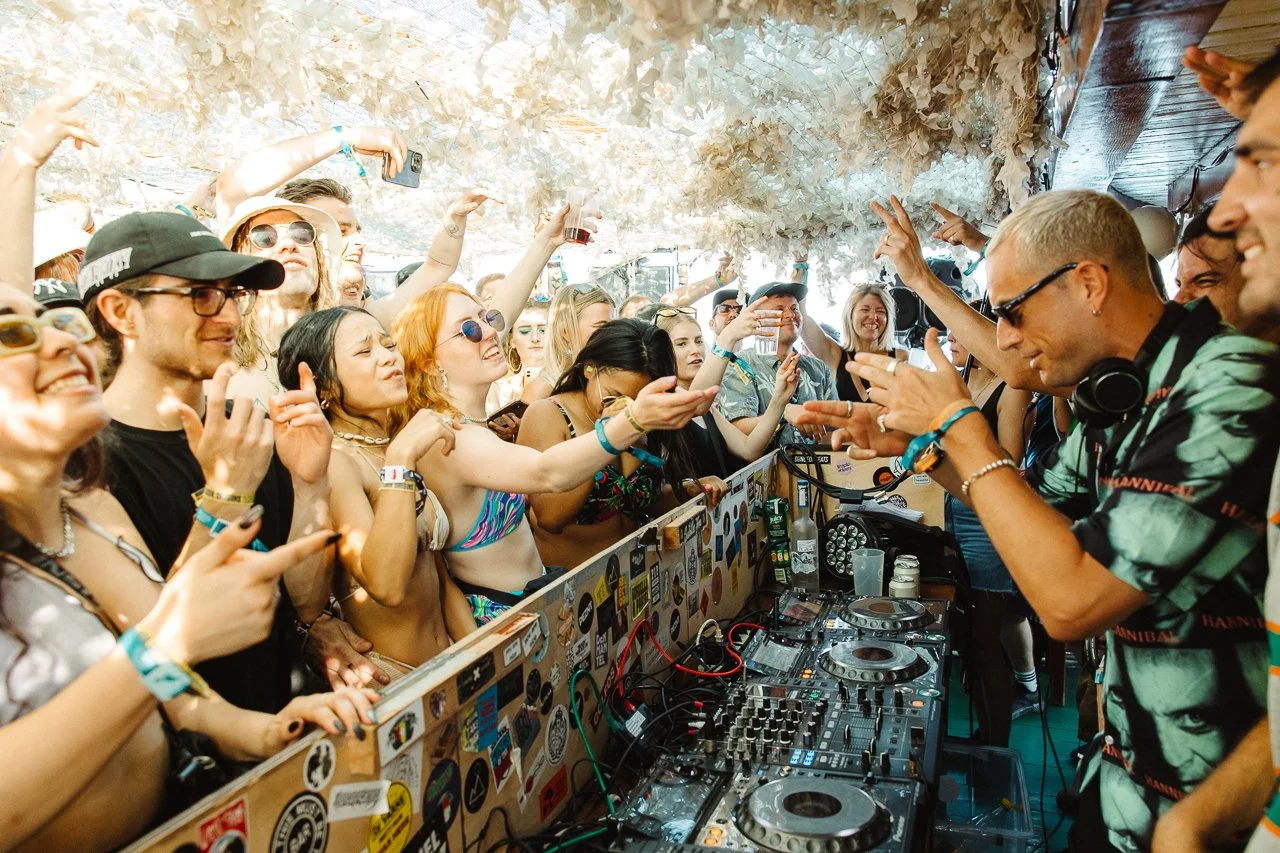
What do you think your younger self would have made of all of this when you first started producing?
Honestly, I'm not sure. I guess now I know that turning up again and again, week in week out with new demo CDs of my early work eventually materialised into something. At some point someone gave me some positive feedback and that was enough for me to keep going. It took years of perseverance (also years of annoying my peers asking if they had checked the tunes haha).
It's funny becuase you're from Belgium but I swear most people here in the UK see you as 'one of ours'. Do you feel that connection with the UK? There's clearly a lot of history there even though you've left us now lol
When I tell people that I'm from Belgium in my London accent, it has a few people confused haha. When I first moved to the UK at the age of 13, I hardly spoke English and had a deep French accent, some of my old mates will remember. I'm just thankful that life led me to the UK. It's all about choices and they really can change your trajectory in mad ways. My appreciation for the UK runs deep. It opened up a lot of doors and opportunity for me, especially this music thing.
One thing we haven't really touched on is the visual side of 1985 and your background in design. That clearly must be very important to you?
Definitely, I mentioned earlier that to me the art is as important as the music it's attached to. Part of the excitement in buying CDs or vinyl is taking in the art. At school and college, I did fine art and then went onto a Graphic Design degree at university in London. I didn't practice much post uni but when it came to building the label it made sense to finally apply myself to it.
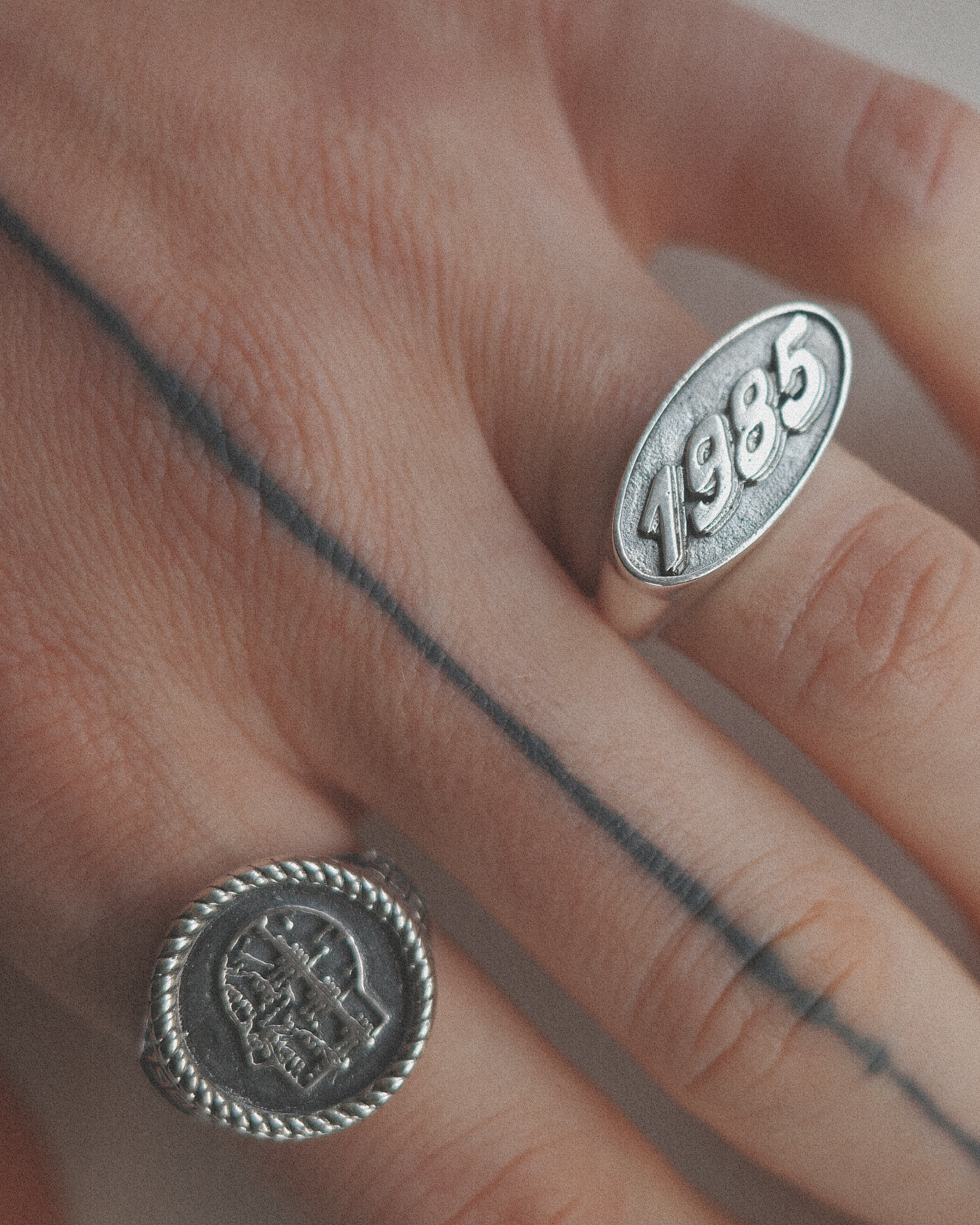
The clothing side of 1985 has gone way beyond merch into a brand in its own right. Do you find yourself spending more time on the music now or the design and manufacturing side of things which is a lot of work in itself?
It's a fine balance between it all. Sourcing good manufacturing and production lines took some time. A lot of trial and error. Now that we have established that side of things, the process is fairly smooth.
Being a fan of clothing and fashion, it got to a point where I wanted to elevate things. I always struggled to source decent blanks for our items which led me to making our own patterns and becoming more Cut and Sew. That's kind of how it became more than merchandise. We also now have access to high quality materials.
The designing and manufacturing process is challenging in similar ways to making music. It's a fun creative process that can become the point of focus when I'm feeling less inspired in the studio for example. Essentially, I design clothes that I would like to wear myself, much like I make music to play in my own DJ sets.
This interview concludes A Decade of 1985 Music, Conduct's three-part series exploring the artists, ideas and creative vision behind the label.
Read Part One: Without Compromise and Part Two: Visages – Entre Deux to explore the story through the perspectives of the artists who have helped shape it.
