"You don't get anywhere in life being a shitebag."
Twelve years ago, Gee was living in Lewisham, South London, working a job he hated and feeling like he was going nowhere. A trip to visit a friend in New York convinced him it was time for a change. He returned to London, handed in his notice, gathered what little savings he had and booked a flight back across the Atlantic. He had a 90-day tourist visa, no real plan and no idea how things would work out.
Photography wasn't even the reason he moved. Although he'd always been fascinated by the medium, collecting photography books and studying other people's work, it wasn't until he was living in New York that he finally bought his first camera. That spontaneous purchase would eventually lead to a career photographing some of hip-hop's most celebrated figures, working alongside brands including Nike, Adidas and Puma, and co-founding Chinatown Sound with rapper Bub Styles.
What began as an impromptu freestyle filmed outside his Chinatown apartment on Christmas Eve has since developed into a platform featuring everyone from underground favourites to established legends, building an audience of more than 100,000 followers along the way. But behind the impressive names and photographs is a story of persistence, self-education, creative independence and thousands of hours of work that most people never see.
For Conduct, we spoke with Gee about his journey, finding his feet in photography, the people who helped him along the way, his love of hip-hop and the importance of getting out there and making things happen.
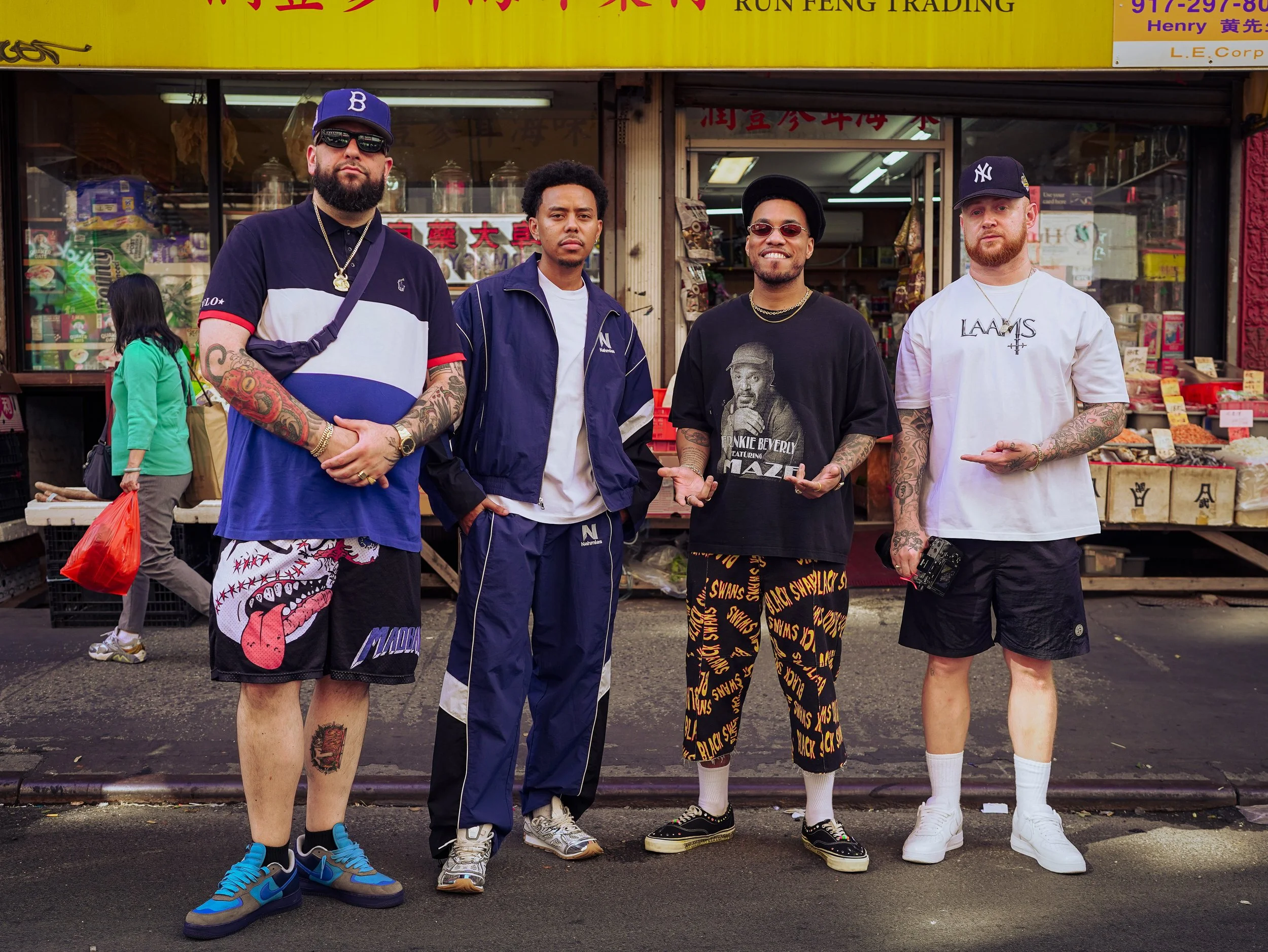
Gee (right) with Bub Styles, Cordae and Anderson .Paak in New York’s Chinatown.
You're originally from Glasgow, but you've been living in New York for around 12 years now. What originally took you out there, and how did photography become part of your life?
I was living in Lewisham in London, working a job I hated and generally just going through the motions. I got to a point where I knew I needed to change something in my life. A friend of mine had recently moved to New York, so I went over to visit him. I'd been to the city before and always loved it, but after spending some time with him and hearing about his life there, I thought, fuck it, why not?
I went back to London, quit my job, took what little savings I had and booked a flight. I had a 90 day tourist visa, no real plan and absolutely no idea how things were going to work out. Bit of a mad decision looking back, but you don't get anywhere in life being a shitebag.
As for photography, it was something I'd always been interested in. I'd collected photography books for years and loved looking at other people's work, but for whatever reason I'd never actually bought myself a camera. Then one day, pretty much on a whim, I walked into B&H in New York and bought one. That decision ended up setting everything in motion.
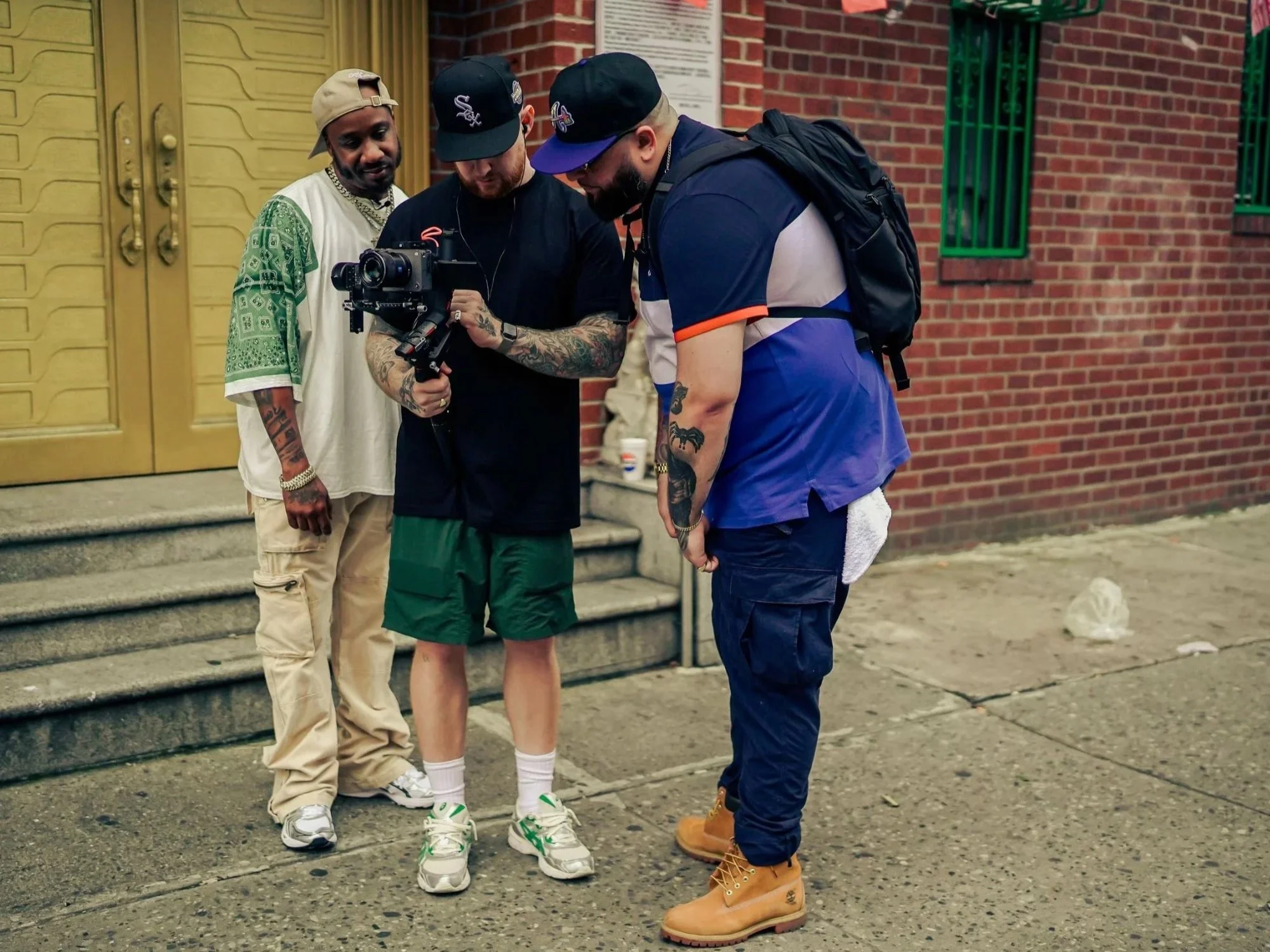
Behind the scenes with Gee on a Benny the Butcher shoot.
You started shooting and making videos as a hobby, yet in a relatively short space of time you've gone on to work with artists like Nas, Lauryn Hill, Buju Banton and Busta Rhymes, alongside some of the biggest brands in the world. That's some pretty rapid progression! What would you put that down to?
A lot of hard work, first and foremost. I think I've been fortunate that I've always had a bit of a natural eye for photography and an instinct for what looks good, but having that ability is only a small part of it. The willingness to actually go out and do the work, put everything into what you're doing and keep pushing yourself is what makes the difference.
I've also always made a conscious effort to get better at what I do. I've spent countless hours watching YouTube tutorials, downloading courses from photographers and videographers whose work I like, and generally trying to learn as much as I can. I'm almost entirely self taught, and I think having that willingness to keep learning has been a massive part of my development. No matter how good you get at something, there's always room to improve.
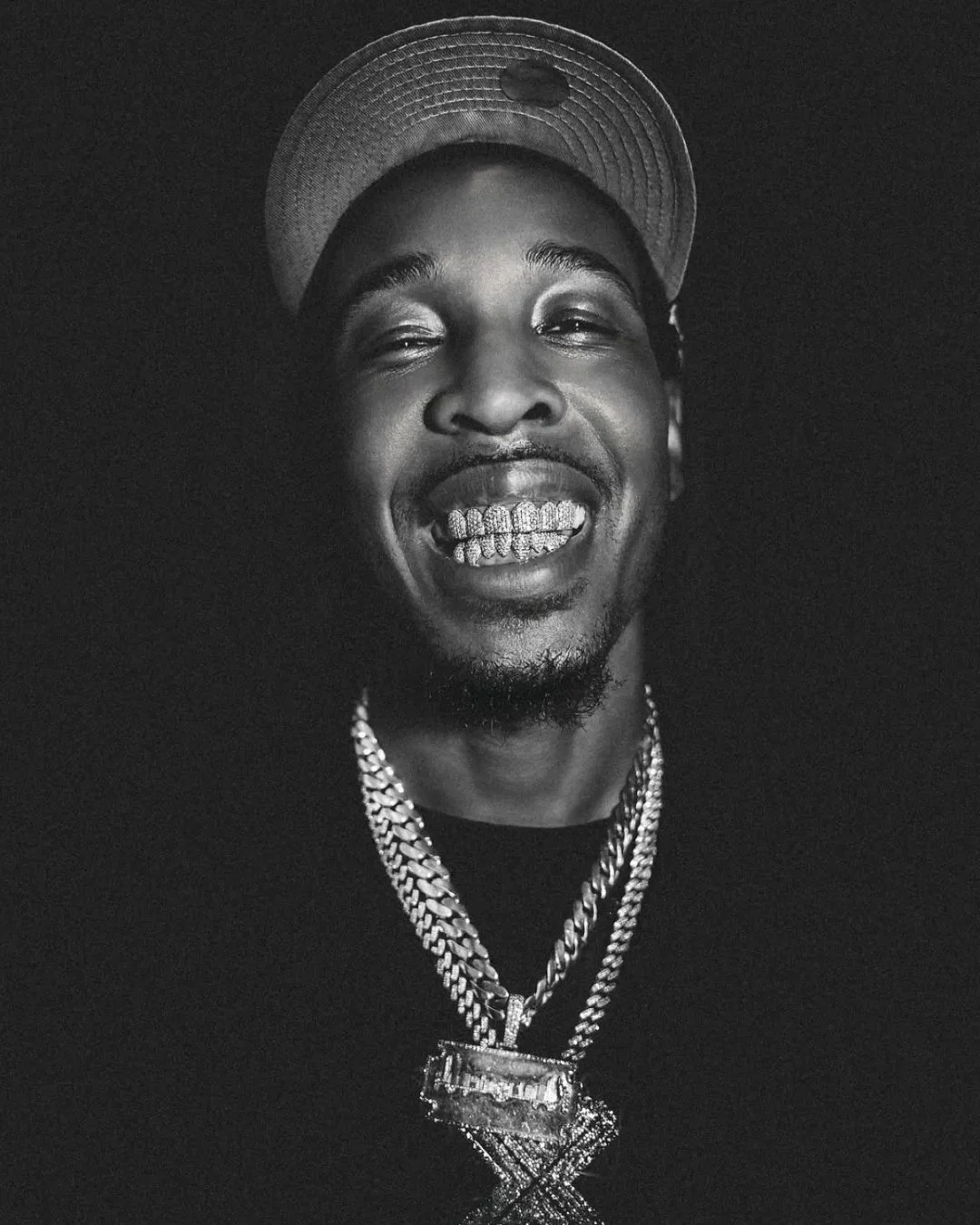
Rome Streetz. Photography by Gee.
A lot of people talk about wanting to be successful, but not everyone is willing to put in the late nights, make the sacrifices or show up and put in the effort on the days they don't feel like it. I've always tried to approach everything I do with the same level of effort, regardless of whether it's a massive project or something small.
I've also been incredibly fortunate with some of the people I've met along the way. Starting to work with No Company was a huge turning point for me, and Ricardo Rodriguez in particular opened a lot of doors and gave me opportunities that helped take my career to another level. He still pushes me to be better at what I do, and I'll always be grateful for that. You can work as hard as you want, but having people who believe in you, challenge you to improve and are willing to give you opportunities makes a massive difference.
Glasgow and New York are two cities with very strong personalities. Have you found many similarities between the people, the humour, the music or the mentality? And do you come across many fellow Scots out there?
Definitely. I've always thought people from Glasgow and New York are incredibly similar in a lot of ways. Both are very direct, straight to the point, and have that same sense of humour where everyone's constantly taking the piss out of each other. You need to be sharp and have pretty thick skin in both places, but I think that's part of what gives the people in each city so much character.
Both cities also have a rich history of immigration and diversity, which has played a huge part in shaping their identities, cultures and music scenes. There's a real sense of pride in where you're from in both places, too, which is something I've always appreciated.
I've got a few mates from Scotland who moved here before I did, but outside of them, it's actually pretty rare that I come across another Scottish person. It's always a bit of a surprise when I hear a Scottish accent out of nowhere.
Gee in Glasgow, before the move to New York.
I played Glasgow Academy with Broke'n'£nglish supporting Redman and Method Man years ago, and it's still one of the wildest gigs I can remember. I've always found Glasgow crowds pretty lively, whereas New York audiences can seem a bit more restrained. Do you think that's a fair comparison, having experienced both?
Yeah, I think that's definitely a fair comparison. I remember years ago when Ghostface Killah came to Glasgow and played the Sub Club, and I've honestly never experienced anything quite like it. The place was absolutely rammed, probably over capacity, and people were going crazy. The energy in that room was unbelievable.
I think a lot of it comes down to how much we appreciated having those artists come to Glasgow. It wasn't something that happened every week, especially with American hip-hop legends, so when someone like Ghostface came to town, you knew it was a special occasion and there was a good chance you might never get to see them in a venue like that again.
Whereas in New York, we're almost spoiled with how much access we have to these artists. I think I've seen Jadakiss about five times in the last year alone. Don't get me wrong, it's amazing every single time, but when you're surrounded by that level of talent and have so many opportunities to see these people perform, it naturally becomes a bit more normal. If I'd seen Jadakiss perform in Glasgow back then, it would've been a completely different experience.
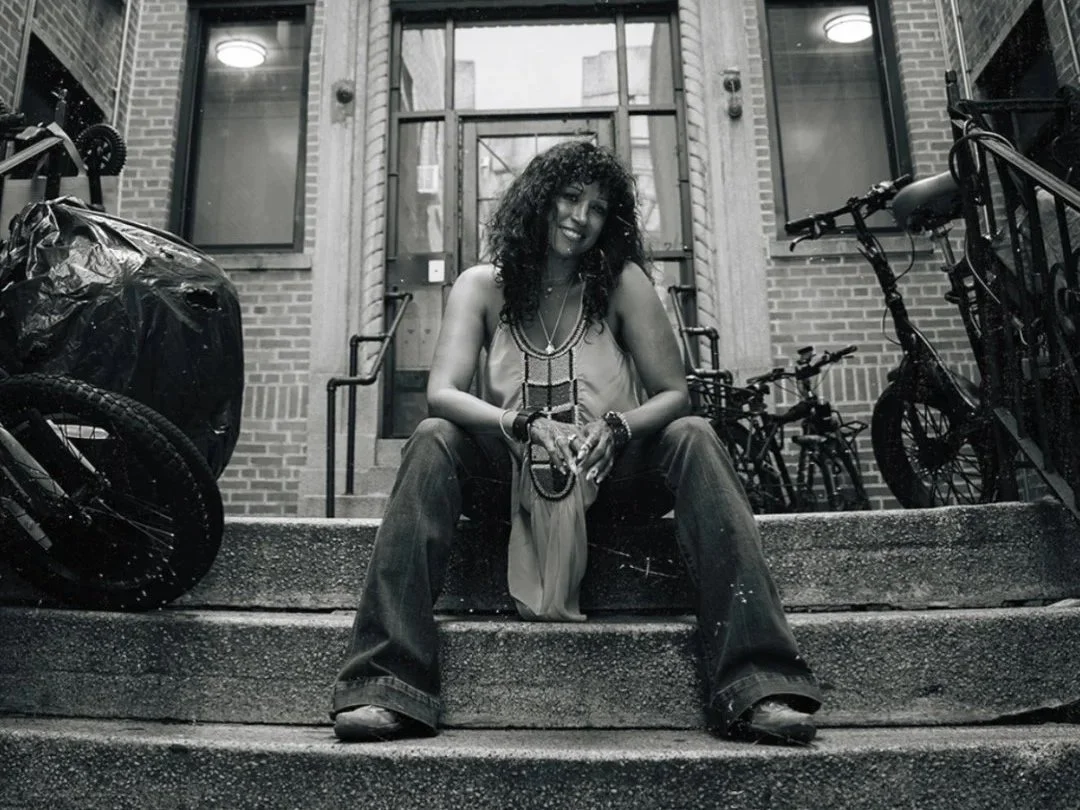
Stacey Dash. Photography by Gee.
Your exhibition 3,218 Miles brought your photography documenting hip-hop culture back to South Block in Glasgow. I love the connection between the title and the distance separating Glasgow and New York. What was it like bringing that work back home, and how did people respond?
It was pretty surreal, to be honest. Going back home and exhibiting my work in Glasgow was a big deal for me, and seeing that many people come out to support it was incredible. I was actually a bit nervous beforehand because I'd been away for so long, and I wasn't really sure what kind of response to expect. The maddest part was having people I'd never met before coming up to me telling me they were big fans of my work. That was a pretty special feeling.
I'd spent years building something for myself on the other side of the world, so being able to bring a piece of that back to the city where I grew up meant a lot to me.
I have to give a massive shout out to my boy Sean Cosgrove at Mara, because none of it would have been possible without him. He pretty much took care of everything on the Glasgow side to get the exhibition off the ground, and I can't thank him enough for that.
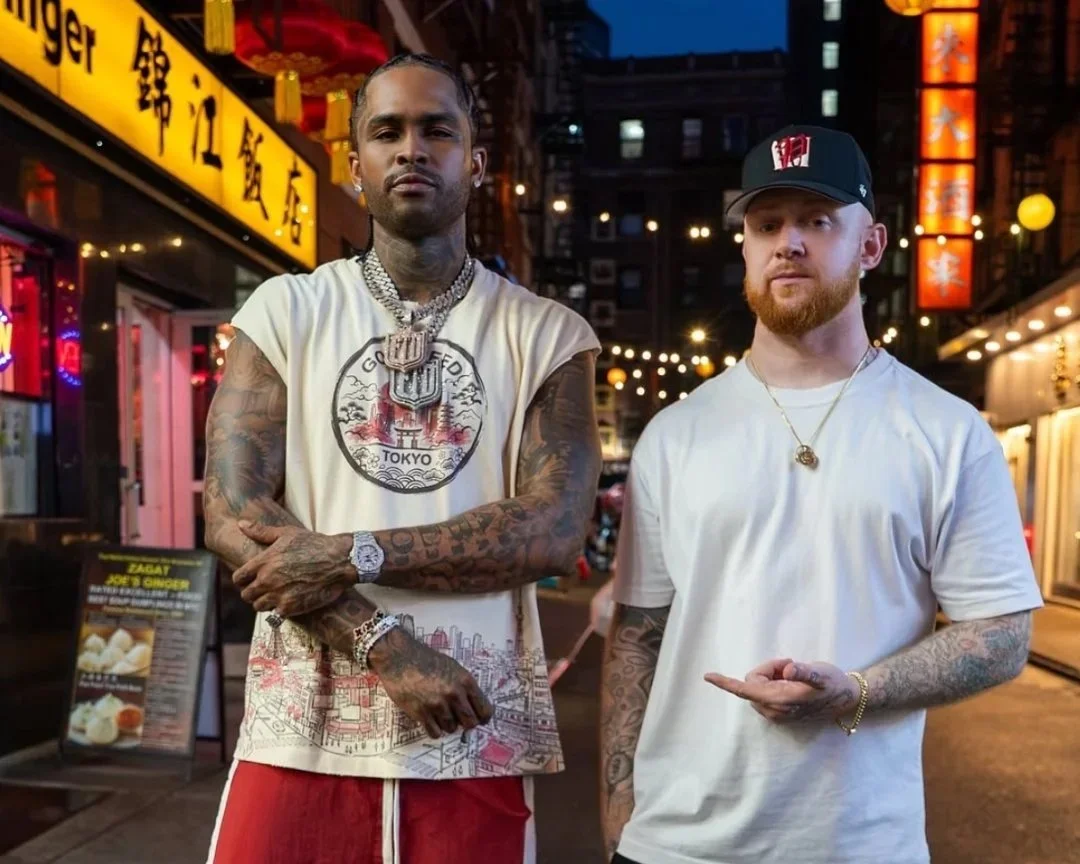
Gee with Dave East.
The exhibition itself was an absolute nightmare to put together, though. The printer I was using in New York broke down halfway through printing everything, so I was scrambling to find another one the day before I was due to fly to Glasgow. Then, on the morning of the exhibition, I got a phone call from South Block telling me that all the prints had fallen off the display boards and some of them were damaged. You honestly couldn't make it up.
Thankfully, I had some great people around who helped me get everything fixed and back on track in time for the opening. After all that stress, standing there surrounded by friends, family and people who'd come out specifically to see my work made it all worthwhile. It was definitely one of those moments where you get to appreciate how far you've come.
You've built a platform called Chinatown Sound with Bub Styles, bringing artists into one of the most distinctive neighbourhoods in New York. What is it about Chinatown that's so special to you?
Mate, the whole thing was a complete accident. I live in Chinatown, but there was never any grand plan to start a platform or even shoot a series in the neighbourhood.
I'd been shooting Bub's music videos for years, so we'd been mates for a long time. We were hanging out at my apartment on Christmas Eve, and I happened to have a couple of lav mics that a friend had loaned me for another shoot. I'd had this idea in my head for a while of shooting a really nicely graded, one-take freestyle video, so I said, fuck it, let's go downstairs and shoot one right now. Luckily, Bub is the type of person who's down to shoot a music video anywhere, anytime, with about eight seconds' notice.
We went downstairs, shot the freestyle right outside my apartment, then went back upstairs and I graded it there and then. Bub came up with the idea of adding those classic yellow film subtitles, which ended up becoming part of the look. We posted it, and the response was crazy. So we figured we'd do a little mini series with a few of our boys. Each one got a bigger response than the last, and before we knew it, we had the beginnings of a platform.
Originally, we were calling them the Chinatown Freestyles, which is a pretty terrible name looking back, so we came up with Chinatown Sound, and it just grew from there.
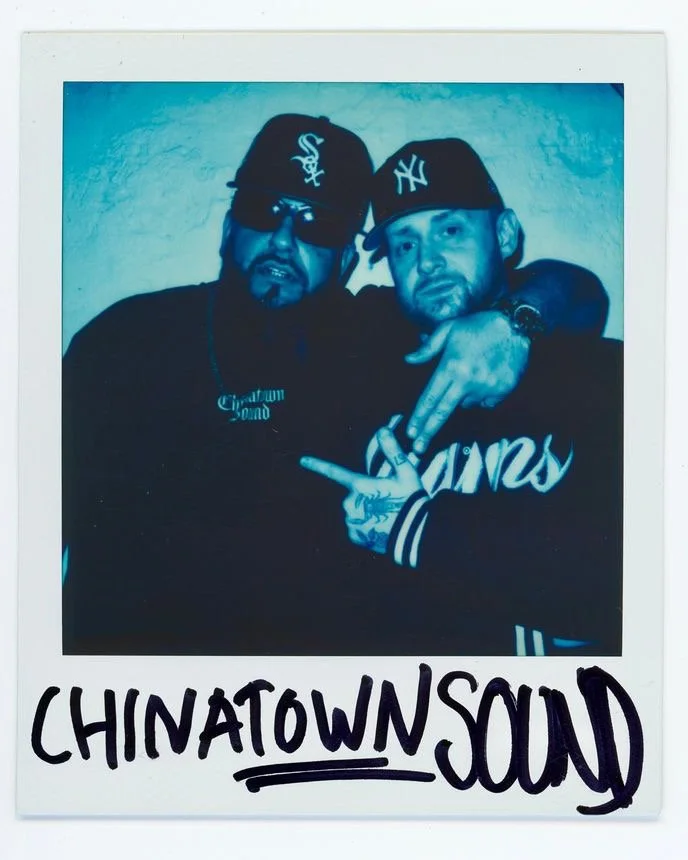
Bub Styles and Gee. Chinatown Sound
As for Chinatown itself, I think it's one of the last great neighbourhoods in the city that's managed to retain so much of its original identity and character. New York has changed massively over the years, and so many areas have lost what made them special in the first place. Chinatown still has that sense of history, culture and community that makes it feel different from anywhere else in the city. I feel fortunate to live here, and I'm glad that something we've built has become so closely associated with the area. We've also been able to use the platform to give a little something back, making donations to the community fridge and the Bowery Mission to help feed people in need. It's only a small contribution, but I think if you're going to build something around a place and its identity, it's important to make an effort to contribute to the community too.
On a side note, please stop DMing me "let's work" or coming up to me and randomly rapping at me without warning. I hate it, and I promise you it's not going to get you on the platform.
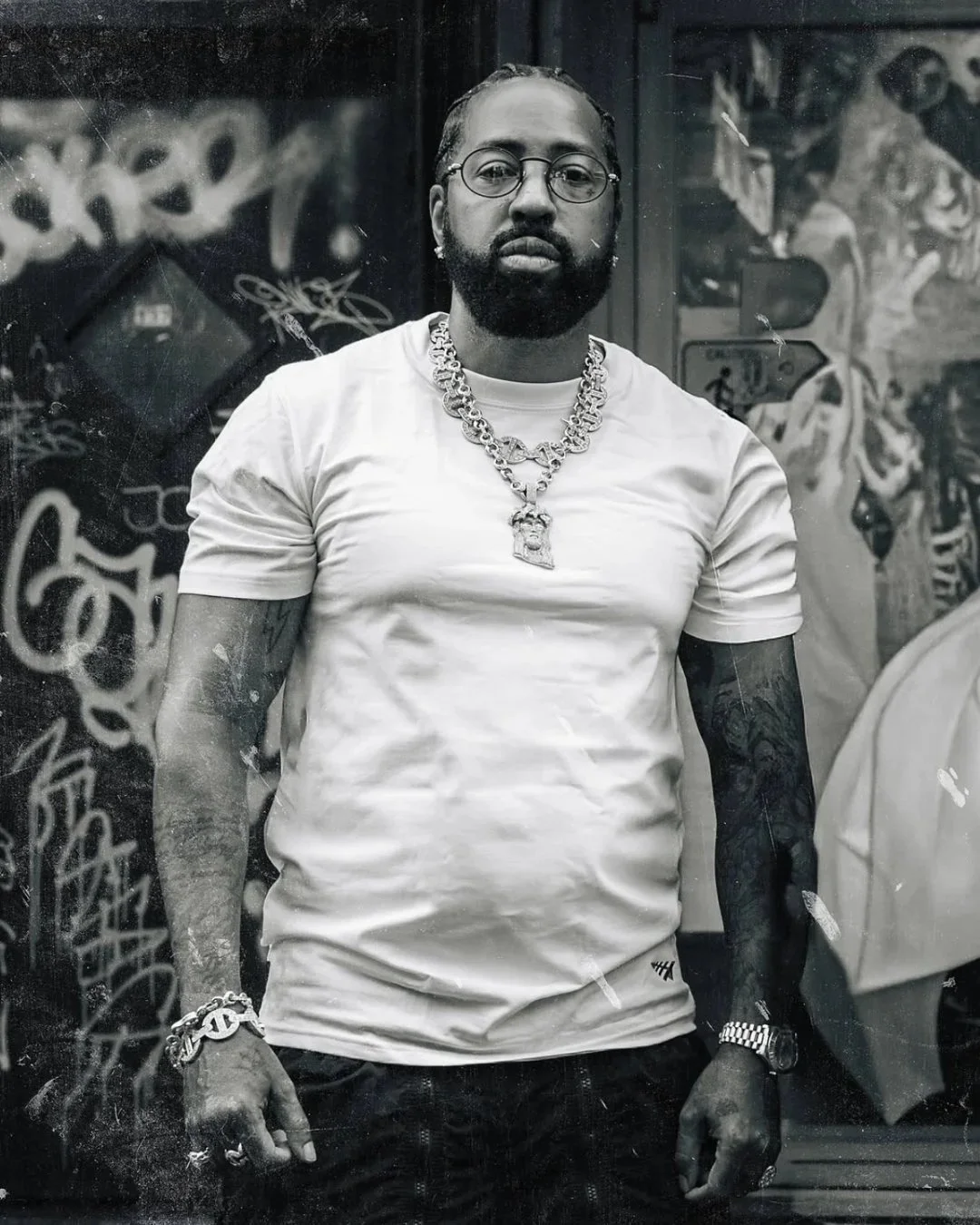
Roc Marciano. Photography by Gee.
I actually named one of my tracks after Nom Wah Tea Parlor on Doyers Street, which has appeared in films like King of New York. I know cinema is a big influence on your work, and being surrounded by places like that every day must be inspiring. How much does the city itself influence the way you approach photography and filmmaking?
First of all, King of New York is an absolute classic!
There's honestly nowhere like New York. Just going for a long walk around the city is a constant source of inspiration. One of my favourite things about living here is how multicultural it is. You're constantly surrounded by people from different backgrounds and cultures, and if you're open to it, you can learn a lot from them. You can be out with a group of friends and every single person has a completely different background, but you quickly realise how much you've all got in common too. I think living somewhere like that definitely changes how you see things.
In terms of photography and filmmaking, the city is a dream. You can walk ten blocks and feel like you're in a completely different place. Different architecture, different people, completely different setting. Even when I'm just out walking around, I'm constantly spotting places I could shoot, thinking about different shots and framing things up in my head. I don't think you ever really switch that part of your brain off.
And obviously, growing up watching so many films set in New York, it's pretty cool to now live in those same places. I'll sometimes walk past somewhere and immediately recognise it from a film I've watched a hundred times. There's inspiration everywhere if you're paying attention.
Chinatown Sound started out as an idea to shoot one take freestyles with people you knew. Now you've featured artists like Buju Banton, Wyclef Jean and Max B, and the platform's passed 100,000 followers. At what point did you realise it was something that was really resonating with people?
I think a lot of people assume we started Chinatown Sound and it just immediately blew up, but the reality is it's been a real grind. We're coming up on the fifth anniversary of the platform, and it's taken an enormous amount of hard work and consistency to get to where we are now.
I remember when our video with Gue became the first one to hit a million views. That was a massive moment for us, and definitely one of the first times we realised just how far this thing could go. But I think the moment I really knew we had something special was when established artists started reaching out to us wanting to be part of it, rather than the other way around.
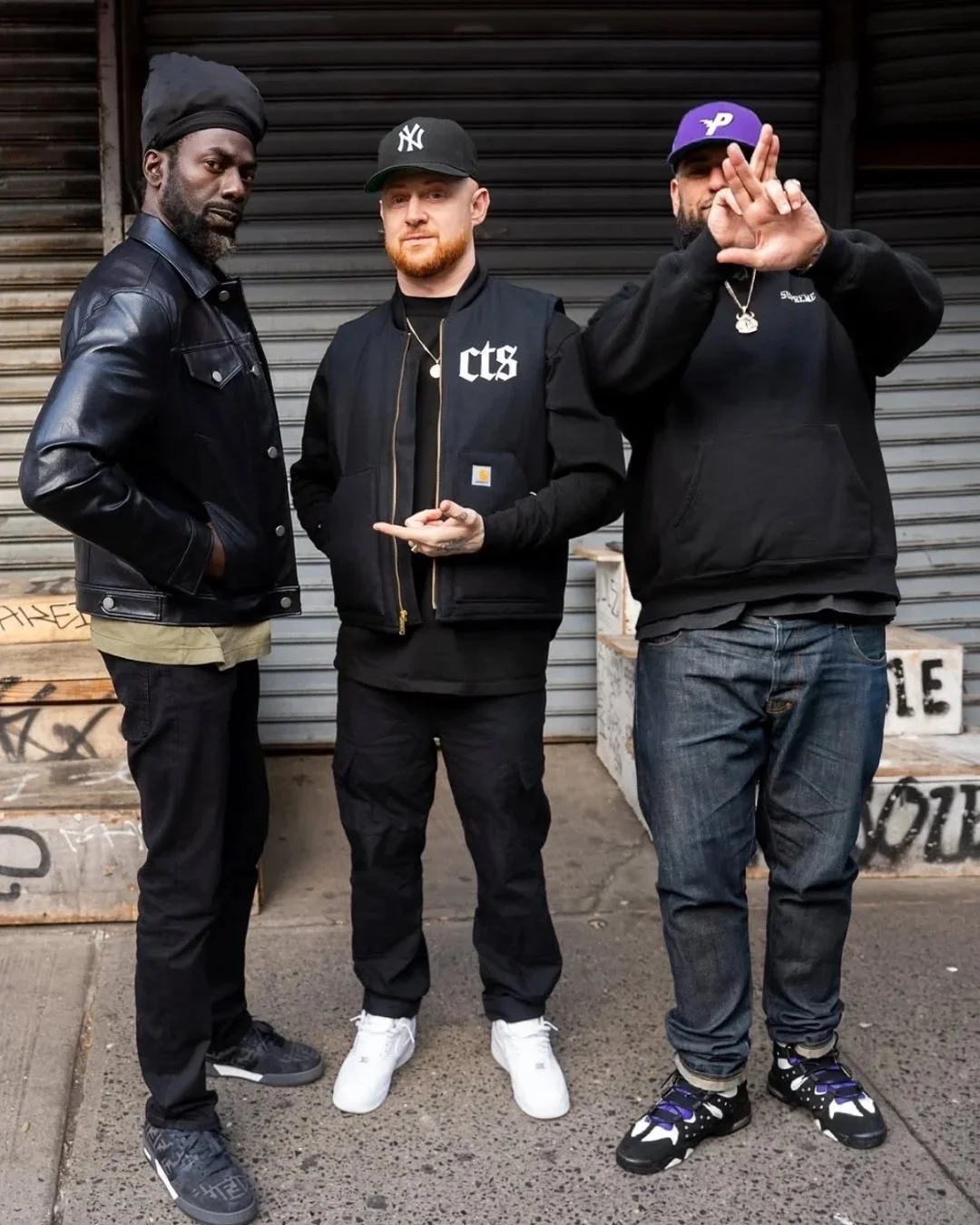
Gee with Buju Banton and Bub Styles for Chinatown Sound.
These days we very rarely reach out to artists ourselves, and we probably turn down about 99% of the people who approach us. That's not coming from a place of arrogance, we're just really conscious of maintaining a certain standard and being selective about what we put out. We've always tried to curate the platform properly and make sure we're representing the full spectrum of hip-hop. We love the lyrical, technical side of rap, but we don't want Chinatown Sound to just be a platform for the whole lyrical miracle freestyle thing. Rap is so much bigger than that, and we want to showcase all the different styles, sounds and personalities that make it what it is.
I also don't think people realise just how much work goes into running the platform. Me and Bub are constantly talking about it, whether it's scheduling artists, coming up with new content ideas, figuring out how to expand or planning what we're going to do next. It's pretty much a never ending conversation between us. We're effectively doing the jobs of an entire team of people between the two of us, and we've put thousands of hours into building Chinatown Sound into what it is today. People see the finished videos and the big names, but they don't see everything that goes on behind the scenes to make it happen. I'm incredibly proud of what we've built.
You've also worked with artists like Westside Gunn, Havoc, Styles P, Rome Streetz and Ghostface Killah. How did you start building those relationships and finding yourself working alongside so many respected names in hip-hop?
It all happened pretty naturally, to be honest. I'd work with someone, the video or photos would come out, and then I'd start getting messages from other artists asking about working together. One opportunity would lead to another, and over time I started building relationships with more and more people in the industry.
It still feels pretty surreal sometimes, especially when I'm working with some of the legends I grew up listening to. Coming from Glasgow, on the other side of the world, I never imagined I'd end up working alongside some of these people. I'm also fortunate that a lot of them have asked me to work with them repeatedly, and I think that's down to making the most of every opportunity, taking the work seriously and making sure I deliver something they're happy with. Getting an opportunity is one thing, but making sure someone wants to work with you again is just as important.
Someone like Rome Streetz is a great example. I first worked with him about six years ago on the Stove Top Serenade and Bible or the Rifle videos, and seeing how far he's come since then has been incredible. To have been involved in a small part of that journey and watched him grow into the artist he is today is really cool. That's one of my favourite things about doing this, the relationships you build along the way and getting to see people you've worked with go on to achieve great things.
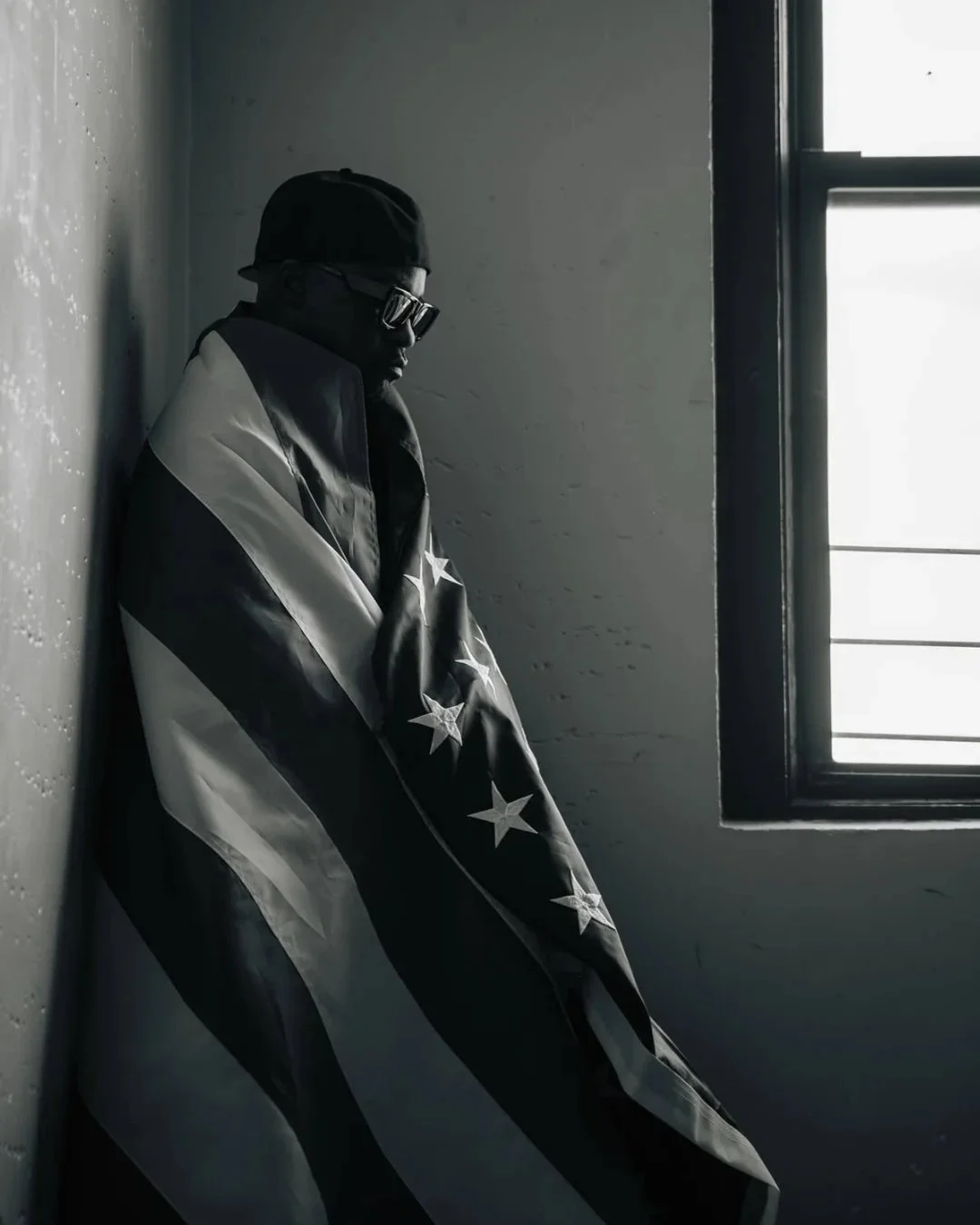
Havoc of Mobb Deep. Photography by Gee.
Mass Appeal's Legend Has It... series has been doing some incredible things for hip-hop, bringing together artists like Nas, DJ Premier, De La Soul, Raekwon, Mobb Deep and Big L. What's it been like working with Mass Appeal and being around projects like these?
It's been pretty incredible. It's always an honour to be around these legends and make even a small contribution to what they've got going on.
I think the Legend Has It series has been really important for hip-hop. There's this weird thing in rap where people don't seem to want to allow rappers to age. You hear people saying they're too old to be rapping, but that doesn't really happen in other genres of music. I think it's important to give these artists their flowers and show people that they're legends for a reason. A lot of them are still making great music, and I think projects like this are a good reminder of that. People need to respect that without these guys, a lot of newer music people enjoy wouldn't exist.
The Mass Appeal team are always great to work with, and I really appreciate the opportunities they've given me to be involved in projects like these.
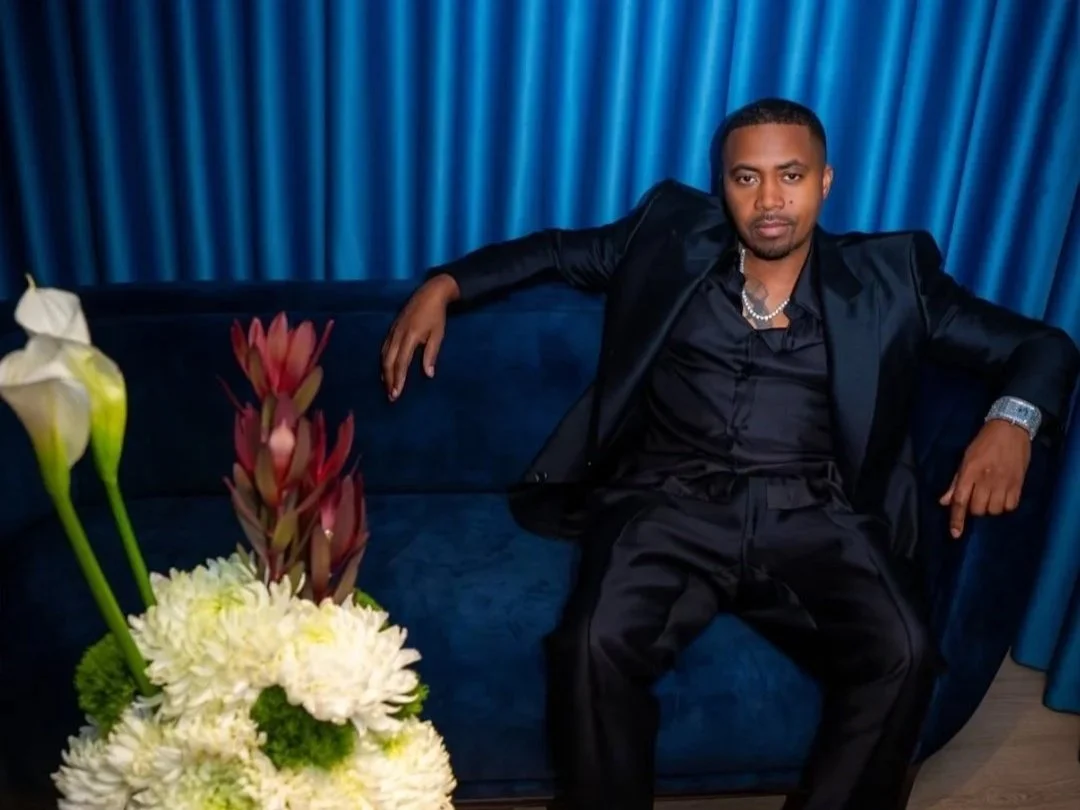
Nas. Photography by Gee.
You've got an incredible archive of photographs of rappers' chains, from iconic pieces like Terror Squad, O Block, MF DOOM and the classic Jesus pieces, to more unexpected ones like Slimer from Ghostbusters and Rugrats. What's the most interesting chain you've photographed, and is there a story behind it?
I've photographed so many incredible pieces over the years that I'm sure I'm forgetting a few, but Fat Joe's camouflage TS chain is definitely one of my favourites. I managed to get some great shots of it at Ryan Witherspoon's basketball game at Nike HQ over the summer.
Westside Gunn's Westside DOOM chain is another crazy one. The thing weighs an absolute ton, I don't know how he manages to wear it all day. I also love Ghostface Killah's five finger diamond Ghost ring. It's such a unique piece and instantly recognisable. And Nas has the most insane Jesus piece I've ever seen. He was wearing it at Comic Con recently, and seeing it up close was something else. It's unlike anything I've seen before.
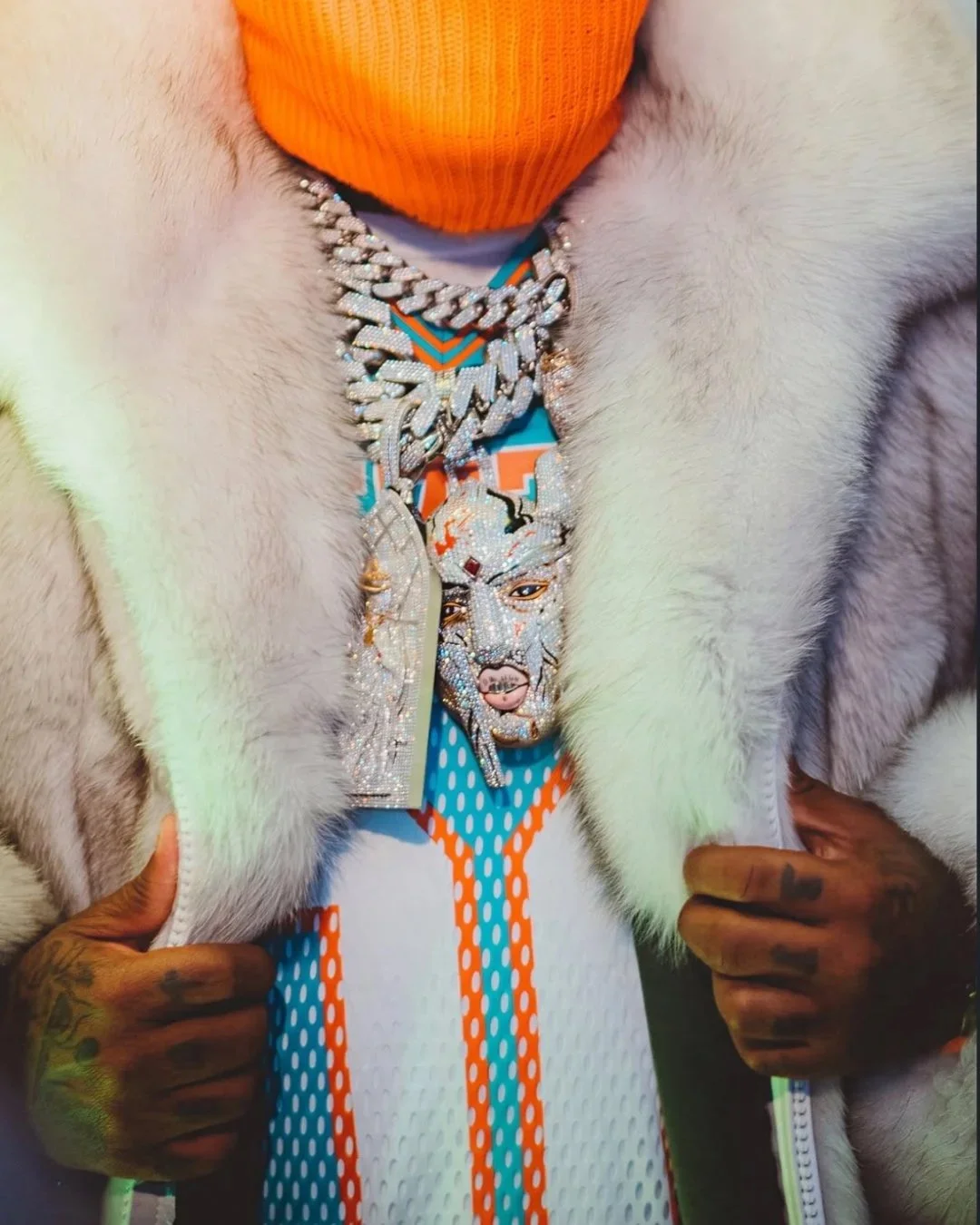
Westside Gunn’s Westside DOOM chain. Photography by Gee.
Alongside your music work, you've also worked with brands including Puma, Nike and Adidas. How does that compare with your independent projects? Do you find there's room to bring your own creative ideas into those commissions?
Working with big brands is always great because there's usually a decent budget behind the projects, access to talent and resources that you might not otherwise have. That can open up a lot of creative possibilities, but it also comes with a ton of hurdles. There's often a lot of back and forth, brand guidelines to work within, and a lot of different people involved who might not always be on the same page creatively. Sometimes even the simplest things can take forever to get approved.
It's very different from working on your own projects, where you can have an idea and just go out and execute it without having to run it past ten different people first. That's one of the things I love most about doing my own stuff, having that freedom to experiment and make something exactly how I want it.
That being said, there's definitely room to bring your own ideas into brand projects, and I think that's part of why they hire creatives in the first place. It's just about finding that balance between what you want to create and what the client needs. Both have their advantages, but there's something really satisfying about being able to come up with an idea and bring it to life entirely on your own terms.
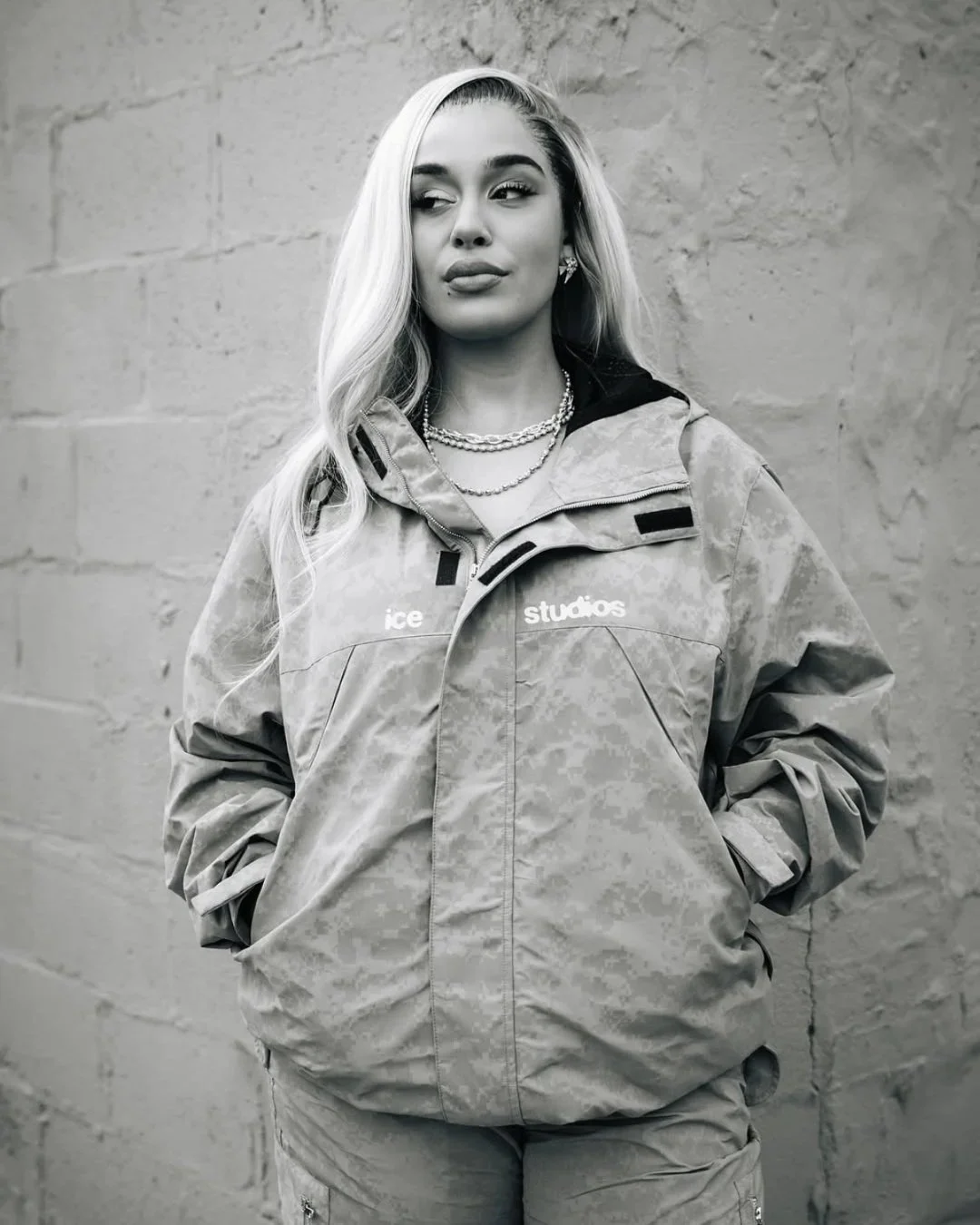
Jorja Smith. Photography by Gee.
I've seen enough Celtic shirts on your page to know where your loyalties lie! How much do you miss going to the games? And did you manage to catch Scotland at the World Cup? I saw the Tartan Army bringing a bit of Glasgow to Boston, putting traffic cones on all the statues. What did you make of the Americans' reaction to the Scottish fans?
I've been a Celtic fan my entire life. I had a season ticket for a good part of it and used to go to pretty much every game I could, home and away, European trips, the lot. It's definitely one of the things I miss most about home, even if we're absolutely rotten at the moment! There's just nothing like football back home.
I've never really been that bothered about the national team, to be honest, but it was a good laugh watching the Scottish fans come over and drink America dry. I think the Americans were a bit taken aback by just how much Scottish people love a drink. I've lost count of how many people have said "No Scotland, No Party" to me since the summer. It's been pretty funny seeing that become something Americans now associate with Scotland.
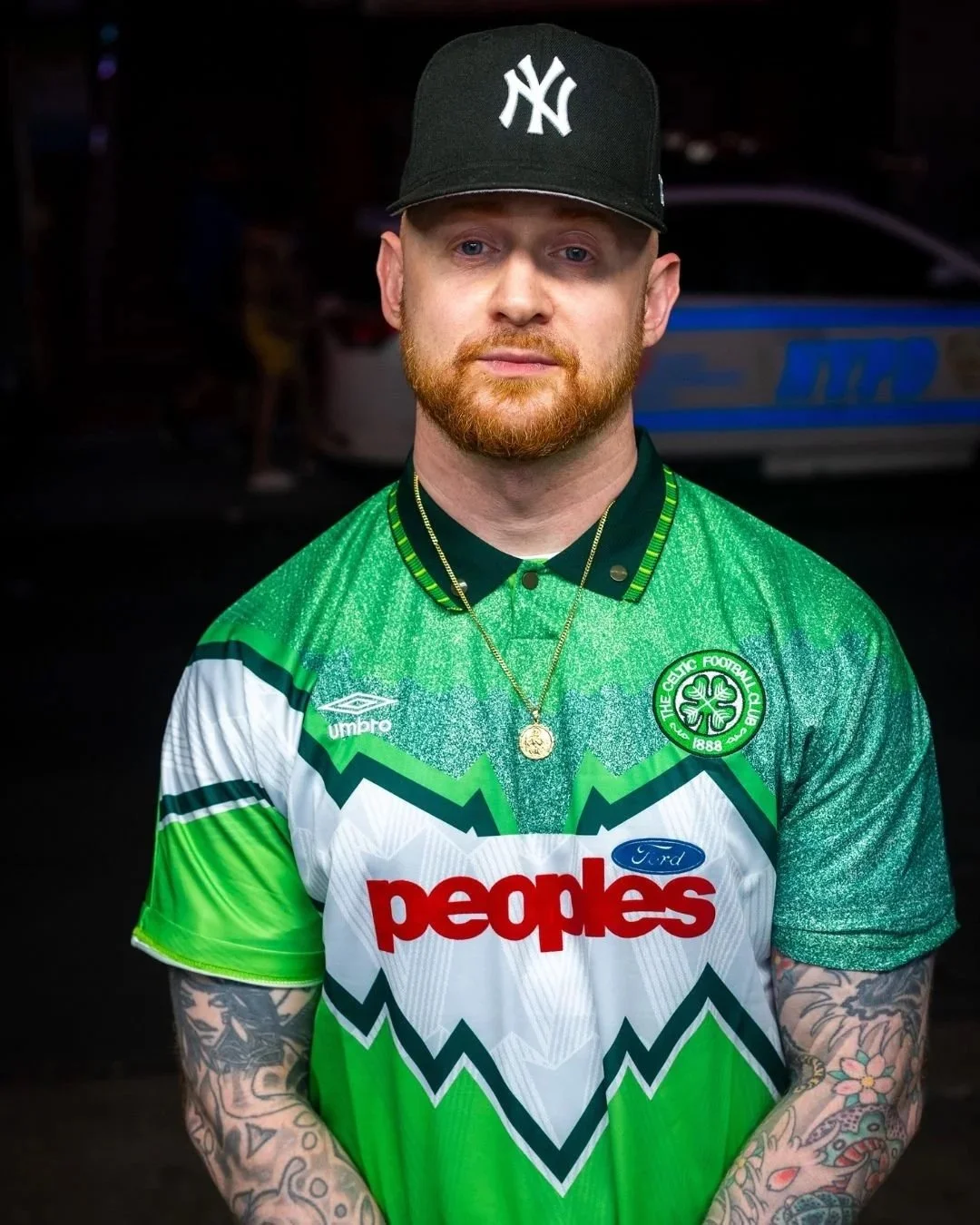
Faithful Through and Through. The famous shirt of Celtic football club
Photography: Gee / @gee.cts
Discover more interviews, photography and independent culture at Conduct Magazine.
