BAMBOY on Parel, D Double E and Why the Underground Belongs to Everyone
Mumbai MC and producer BAMBOY, known also as Kaali Duniya, has been building underground bass culture in India for over a decade, largely without institutional support and entirely without apology. Growing up in Parel, one of Mumbai's most storied working-class neighbourhoods, he was carrying speaker boxes for local soundsystems before he ever opened FL Studio. He found grime through a Wiley record, found his voice through a crew that pushed him, and found a stage when D Double E pulled him up mid-set at Boiler Room Mumbai.
But it's what he has built himself, Low End Therapy and Right to Dance, that tells the fuller story. Both events are responses to the same reality: that India's dancefloors, like dancefloors everywhere, have been shaped by money and caste in ways that leave the people who actually created the culture standing outside them. BAMBOY is changing that, one 140 rupee door charge at a time.
We sat down with him to talk about Parel, the politics of the dancefloor, his encounter with D Double E, and why Right to Dance was born out of a necessity to do more.
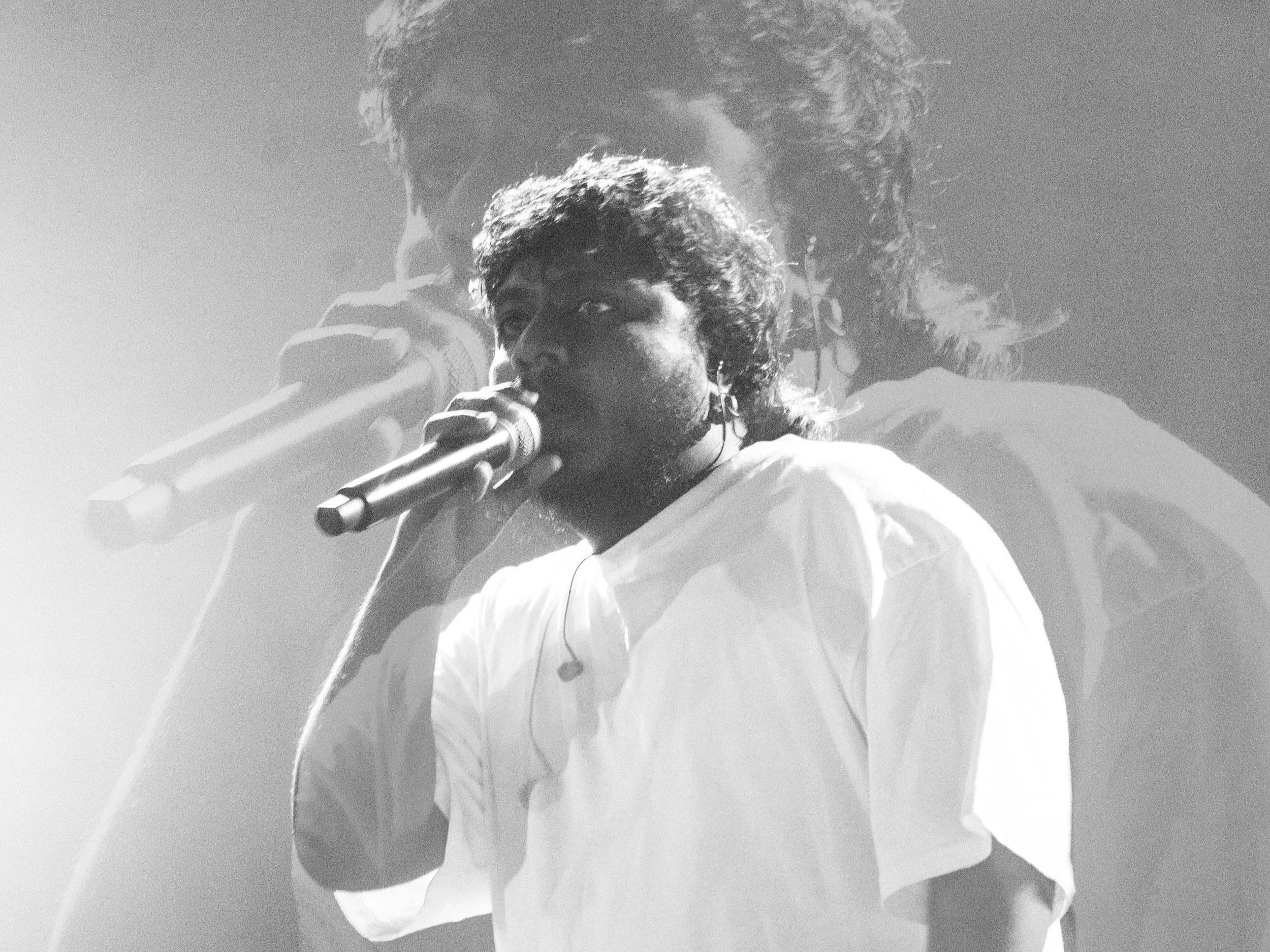
To start from the beginning: where are you from exactly, and what was your early environment like growing up?
I'm from Mumbai, India, from a neighbourhood called Parel, 400012. Parel is one of the notorious areas in Mumbai and is surrounded by crime from all sides, but it is also one of the most culturally rich areas in the city.
My childhood was rough, like any other poor kid from the city. I used to love to dance, play cricket, and I played a sport called kho-kho for my school.
Outside of school, my life was completely different. From a very young age I was exposed to smoking, alcohol, robbery, prostitution, dance bars, local gang wars, drugs, scams. Outside of school, this was my reality. I made sure my parents never got to know about my life on the street.
But thanks to the streets I was also exposed to our local soundsystem culture and DJing. I was a box boy, a sound boy, lifting boxes and wires for other people. The love for music was always there, it just needed a proper channel. Then I got to know about FL Studio while I was in school, through a friend, and I started producing.
Music helped me get out of the situation I was in. Without it, I would have ended up in prison.
At home, my parents tried their best to keep me off the streets. They made sure I took education seriously, they believed education was the only way forward for us to get out of poverty. They still ask me to apply for a government job or learn to drive so at least I can be an Uber driver. They don't think I'll be able to do music long-term. I don't blame them. Where we come from, this lifestyle is unimaginable.
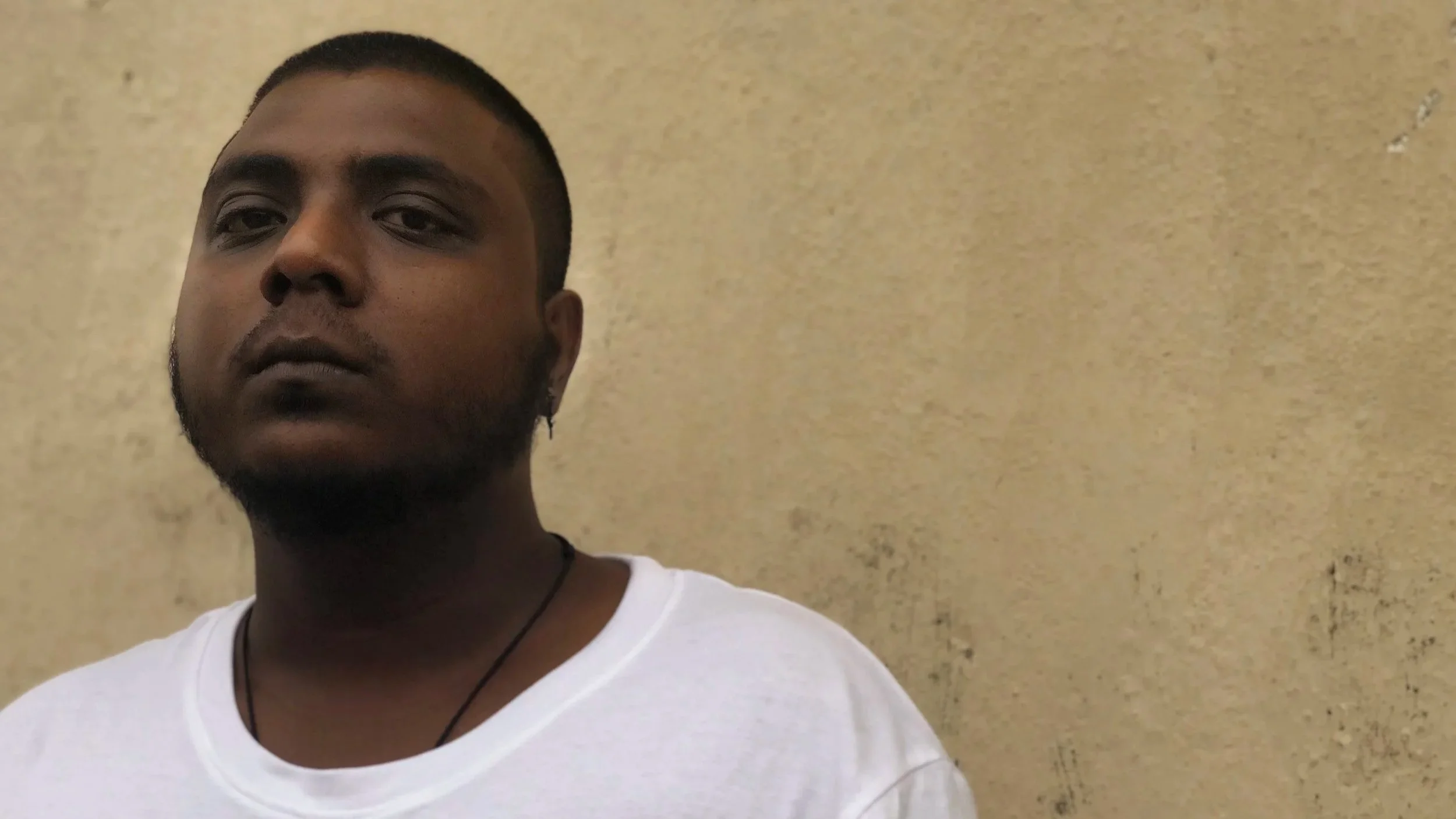
What did music look like around you as a kid? What were your parents or family listening to?
At home my mum and dad used to play old Bollywood songs from the 70s and 80s on a little cassette player. Lots of Lok Geet, folk songs, and Bhim Geet, which are songs about Dr. B.R. Ambedkar, the legend who wrote the Indian constitution.
On the street it was religious music from different communities during their festivals. On soundsystem it was Bollywood songs with cheap, vulgar lyrics. I used to remix those when I first started producing, actually. And the same songs used to be played in the dance bars.
Do you remember the first time music really hit you in a way that made you want to be part of it?
I don't remember exactly, but it must have been the moment when I realised that the Bollywood remixes I was hearing on the soundsystem, I could produce those in FL Studio.
In the early days it was nothing serious, just an experiment, a hobby. But as I got towards the second year of my degree I started discovering global music: HipHop, Reggae, Ambient, Dubstep, Grime, Drum and Bass. That changed everything.
At what point did you go from producing to picking up a mic?
The mic, the pen, and poetry came very late in my life. I still tell people I'm mainly a music producer, I've been making music since school.
My childhood friend, brother and crew mate, the late Dharmesh Parmar, MC TODFOD, was part of a HipHop collective called Swadesi, which I've also been part of since 2016. He told me: stop producing this EDM, big room progressive house bullshit and start producing HipHop. He made me listen to Immortal Technique, Klashnekoff, J Dilla, Vinnie Paz, Lloyd Luther, Strategy.
In my area I also met Omkar Chikalkar, OZ, who raps in English. He introduced me to more US hip hop. I also discovered the new wave of reggae: Damian Marley, Chronixx, Kabaka Pyramid, Jesse Royal. The more I listened, the more I started paying attention to lyrics. Damian Marley's verse on Patience really hit me. I resonated with Jamaican patois before I even fully understood US and UK English accents. Their style, their flow, the way they delivered every word. That was the first time I felt that pull.
I started writing at the end of 2016 but never told anyone. There were so many great MCs around me in the crew and I was too shy. Ice Cube's line, 'Ay yo Dre, stick to producing,' was haunting me.
Around 2018 I recorded a demo and made TODFOD listen to it. At the next jam he asked me to perform it in front of the whole crew. That was it. I first picked up the mic on stage in 2019 at a festival called Control Alt Delete in Mumbai.
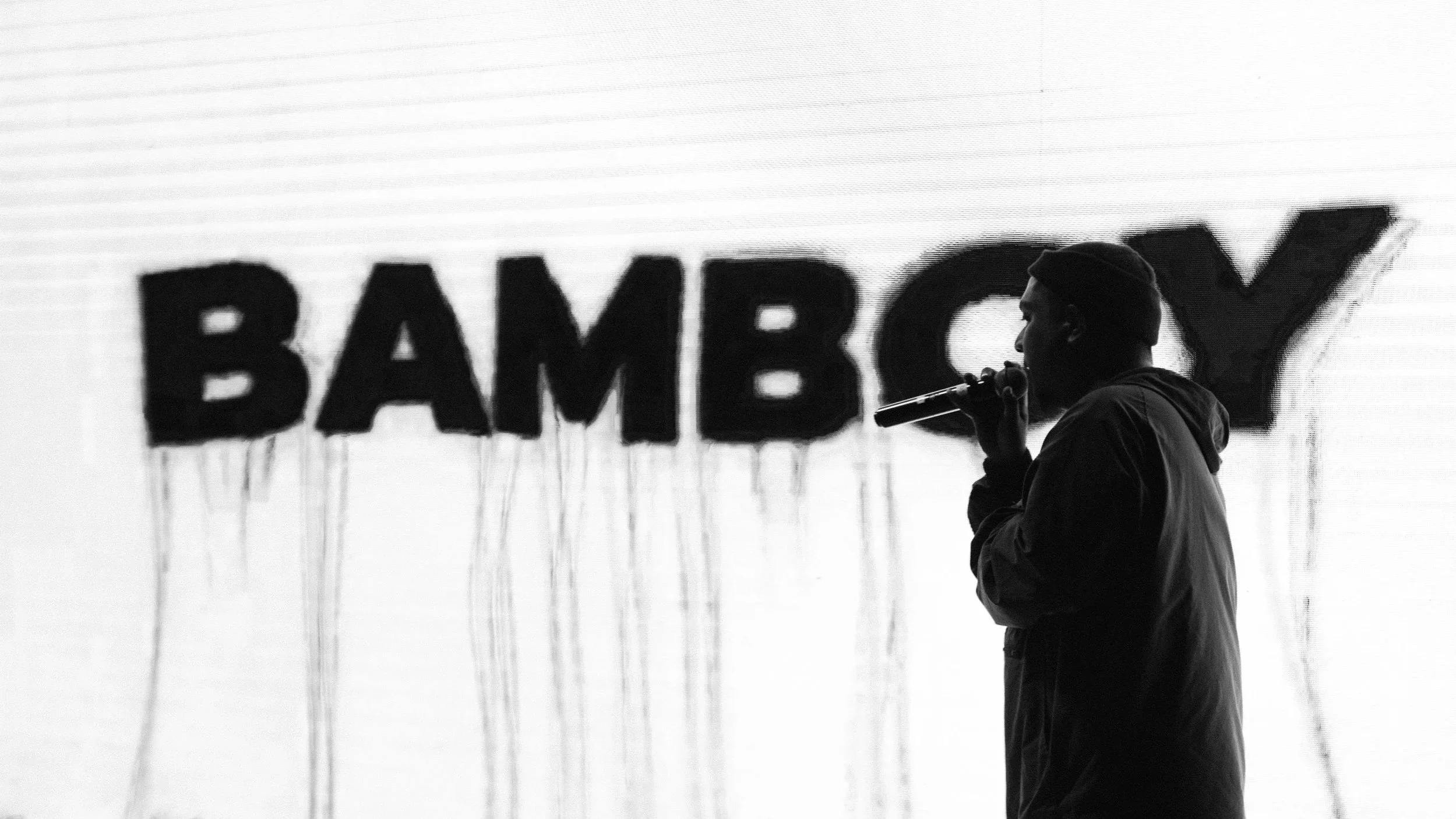
I came to Pune back in 2017 with Dub Phizix, and the energy there is something people outside India probably can't even imagine: loud, chaotic, alive. How would you describe that energy to someone who's never experienced it?
I don't know much about the bass scene there specifically, but Pune is one hundred percent wicked. I've spent a lot of time there with some of the illest MCs and crews. The graffiti scene in Pune is also mad.
Pune is three or four hours from Mumbai. As you said: loud, chaotic, alive. But for me Pune is laid back and chilled, whereas Mumbai is a fast-moving city, full of rush and hustle. It's the financial capital of India, the City of Dreams, no doubt.
Nowadays people's perspective on a city is shaped by algorithms. You have to come here to actually experience this.
How has your environment shaped the way you approach sound, performance, and identity as an artist?
My environment reflects in everything: in how I write, how I produce, how I perform. Street life from the third world makes you tough, no doubt about it.
But alongside all the noise and negativity, I've been lucky to be surrounded by brilliant MCs and producers.
Artistic identity is something I still wrestle with. I do a lot of things: as BamBoy, as Kaali Duniya, and I've also started a new project called Galitch, meaning dirty, unclean, filthy. Through that I produce experimental, hyper-glitch, noise and all kinds of weird music. I do visuals at times too.
But beyond artistic identity, the one identity that has truly shaped my life is my caste identity. Your caste literally shapes your language, your food, your relationships, your musical taste, your access to world culture. Everything.
I come from a community considered untouchable, placed at the very bottom, or rather outside, of the social order. Years of oppression have shaped the way I perform and approach music.
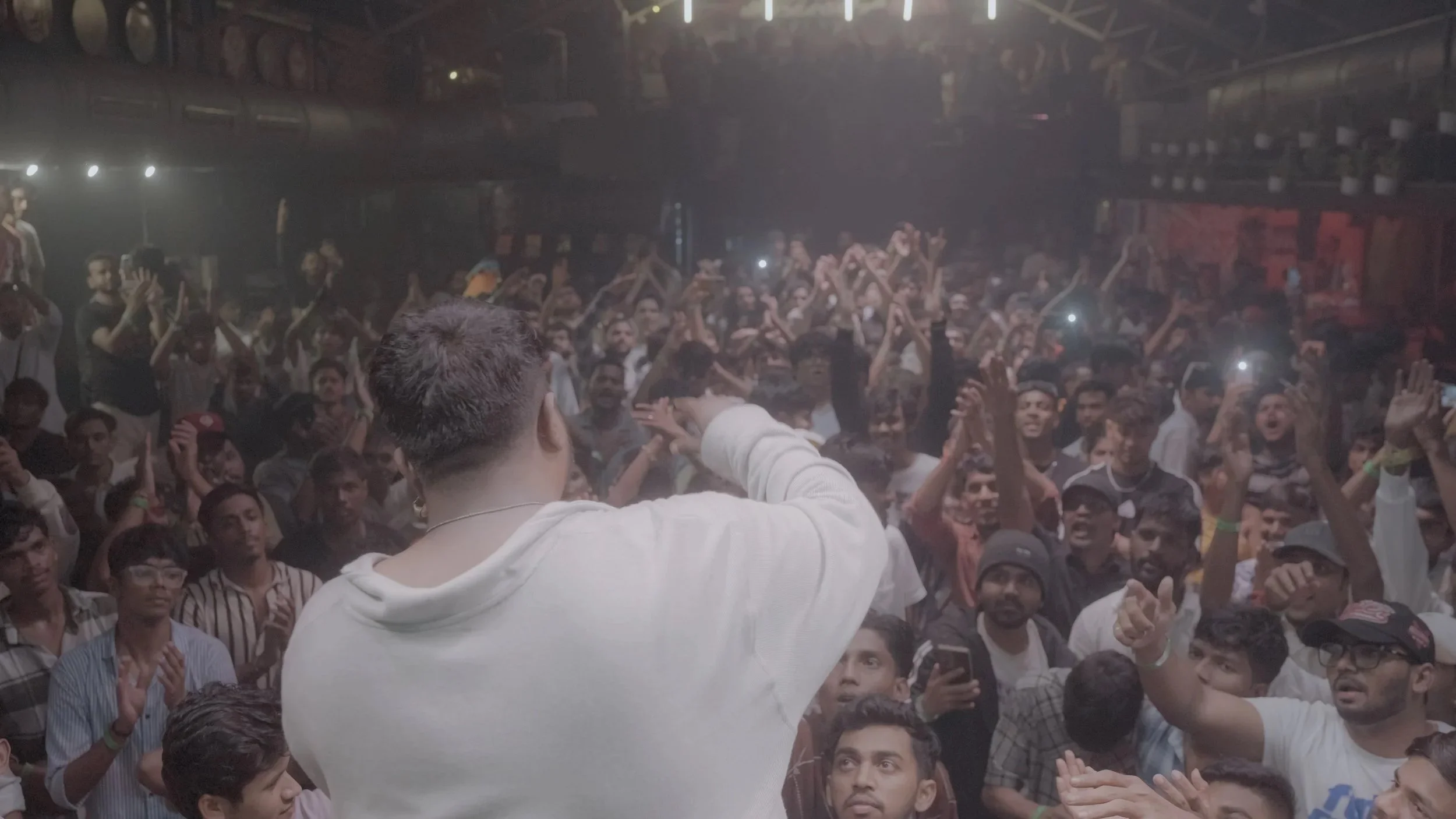
You've mentioned before that your flow is influenced by artists like Grim Sickers. How did you first come across grime?
To be clear: the track I performed with D Double E during his Boiler Room set in Mumbai is called Seismic Bars, and it's already out on Bandcamp and SoundCloud as part of O.M Theorem's album Eruption. The hook of that song is inspired by Grim Sickers ft. JME, Kane, but not the whole track.
My flow is actually more influenced by Riko Dan, Killa P, Flowdan, Irah, Wiley, Durrty Goodz, P Money, JME, Devilman, Skepta, Namesbliss, Logan, to name a few.
The first grime tune I heard was Wiley, Step 20. I didn't even know it was grime, I just knew I'd never heard that accent before. Then my brother TODFOD made me listen to Shutdown by Skepta. After that I started digging and learning more about the UK scene, and by that point I'd also discovered Dubstep.
What was it about grime specifically that connected with you compared to other styles of rap?
The energy of the genre itself. The fast flow, the beats, each MC having their own style, not just rapping, but their own adlibs and phrases too.
I used to watch documentaries, archive videos, whatever material was on YouTube. Somehow it felt like home. Even though I love HipHop and Reggae and Dancehall, grime just felt natural. The first full track I wrote with a proper hook and three verses was a grime track.
I wasn't necessarily connecting with the lyrics in the way you would if you'd grown up in London, because I lived in a different kind of hellhole. But the flow, the delivery, that connected immediately.
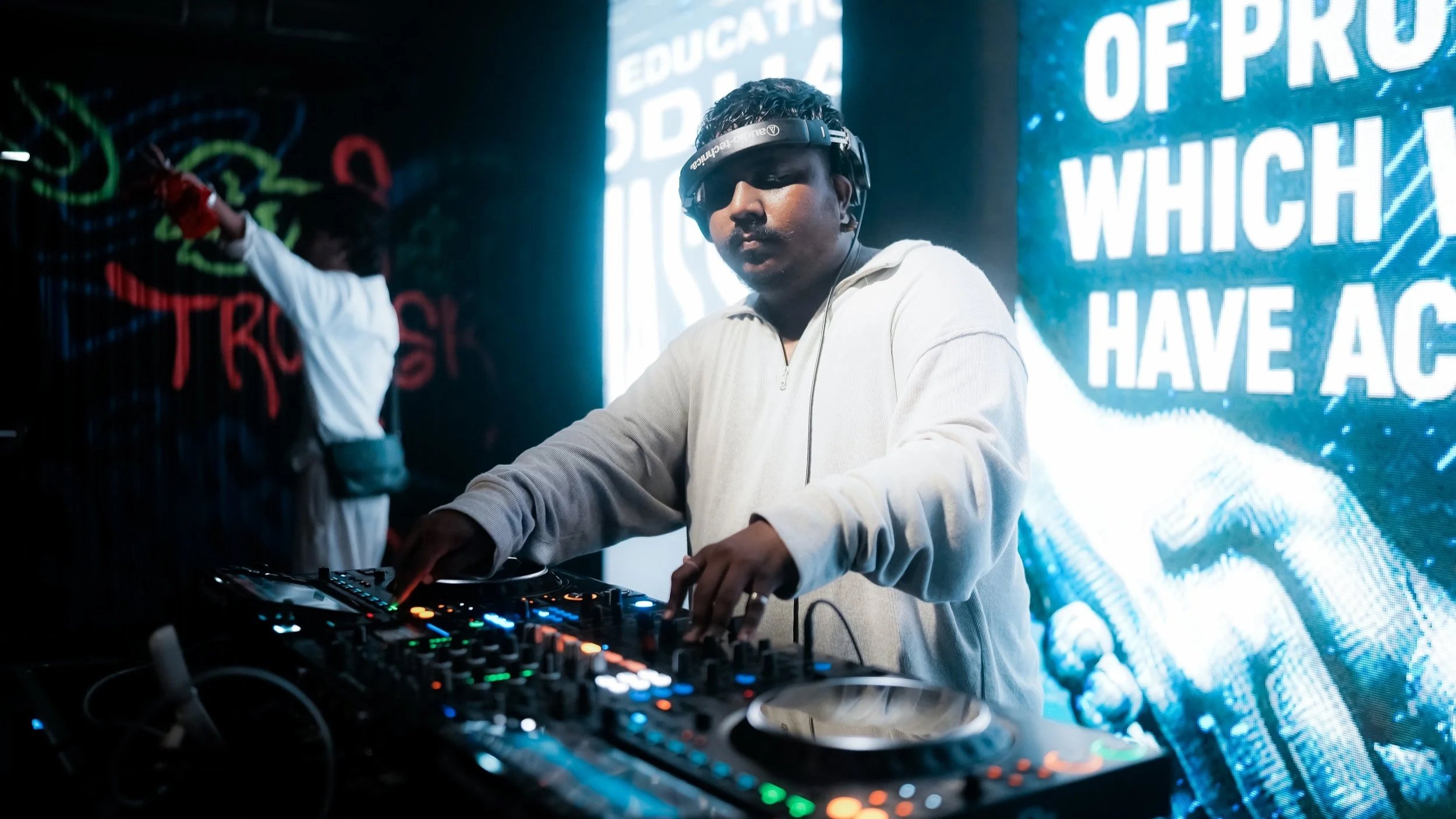
You seem to get the biggest reactions from the crowd. Where does that energy come from, and do you feel that connection when you're performing?
For me, writing, producing and performing are the only times I get to fully express myself.
But the whole ecosystem of the Indian music scene, the bass scene, is so royally fucked up that there are very few platforms and opportunities for us to perform. So the energy naturally comes, because that moment might be the only moment for a long time. We never know when we'll get to perform next in our own city. That energy, that fuck the system energy, is already piled up inside.
I absolutely feel the connection. But I think the crowd at the Boiler Room reacted the way they did because they'd never heard a local voice, a local language, local slang in that kind of space before. Those platforms are highly dominated by upper-caste, upper-class people, and most of them weren't really engaging with the lyrics.
The reaction from crowds that come specifically to see us is on another level entirely. They know the words, they understand what's being said. Most of them come from the same social and economic background. That crowd hits different.
Which part of India has the best crowds and the most energy?
For me it will always be Mumbai.
Delhi and Bangalore also have wicked crowds who are into UK sounds.
But across the whole of India, for folk, tribal, classical, religious and world music, every region has its own incredible crowd and energy. That side of things is on a completely different level.
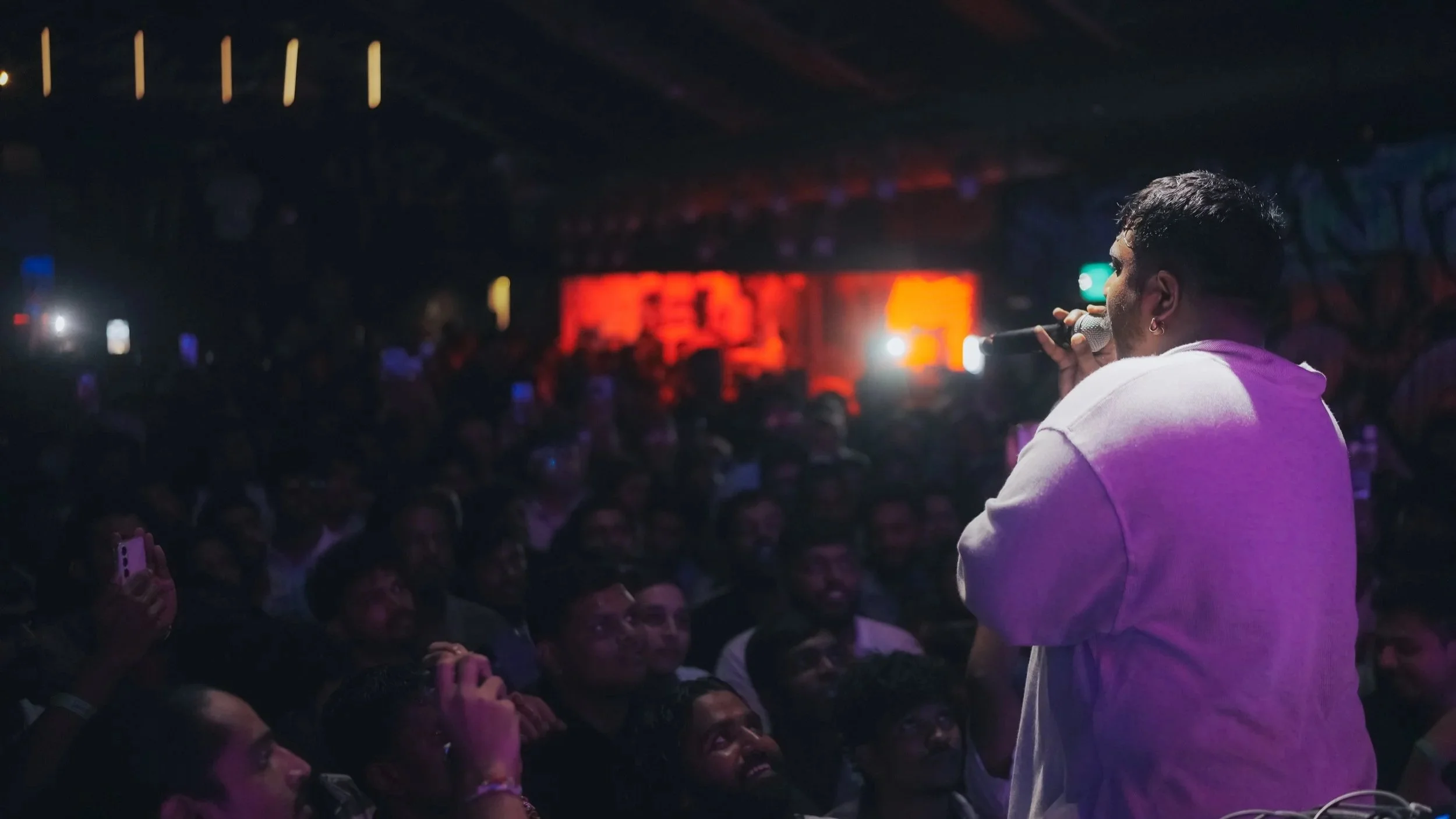
You recently shared a moment with D Double E. How did that link-up actually come about?
When I saw the announcement I quickly registered, hoping to get an invitation. I waited until the day of the show but nothing came. Meanwhile I was messaging industry friends trying to get on the guestlist. One of them was working with the team managing the event. I was telling him: bro, I need to get in, I want to see D Double E and if possible meet him.
Then while I was on my way to the show, he sent me a screenshot. His friend, who was managing the artist, had messaged: 'Ask BamBoy, he's ready. D Double E wants to meet him and wants him to hop on a track during the set.'
I was asking people to put me on the guestlist. Then suddenly this.
But the best part happened the next day. I was opening as Kaali Duniya, playing a DJ set before Sir Spyro and Killa P's India tour, and D Double E showed up. The three of us did a proper session going back to back while Sir Spyro was on the decks. That moment was a hundred and forty times more precious to me.
D Double E, Killa P, Sir Spyro. All of them are super kind, genuine people. When an artist supports an artist, no gate or gatekeeper is strong enough. It has to break.
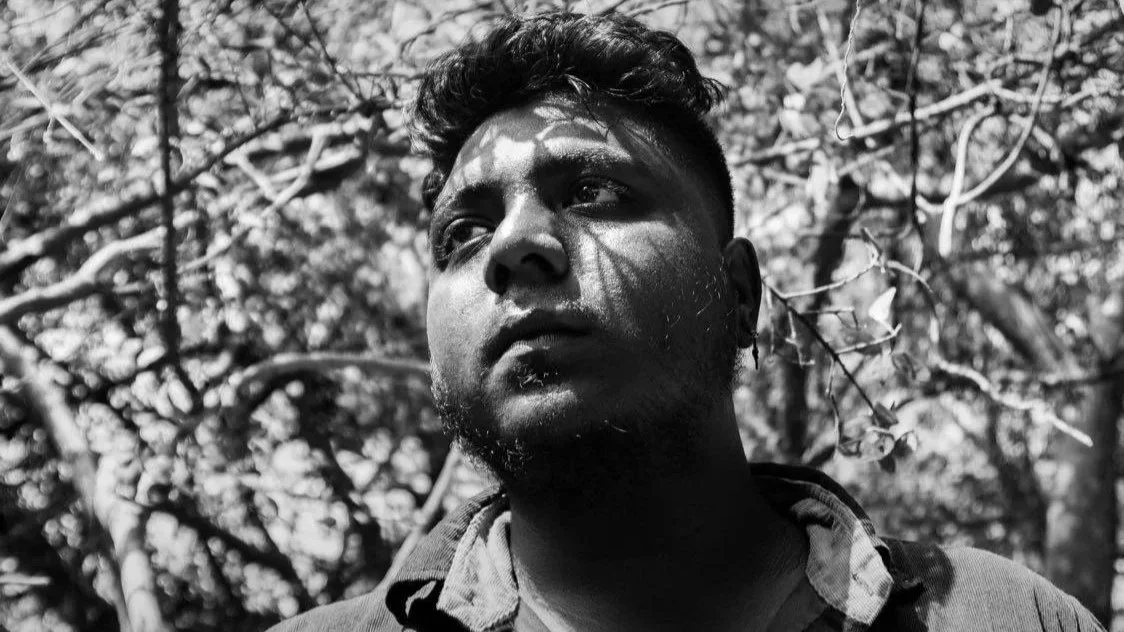
What did it feel like performing alongside someone like that, seeing him vibing to your performance?
It felt like a dream. In the middle of the track, when I heard his adlibs, oohh oohh, I almost forgot my verse.
I had no idea which beat I was jumping on. Nothing was planned, everything was spontaneous.
Do you see moments like that as opening doors for more collaboration between the UK and India? Can we expect a collaboration?
The jungle and DnB scene in Mumbai has been going since 1999, but it was only ever accessible to the upper class. Now it's different. The streets are getting to know grime, dubstep, drum and bass, reggae and soundsystem culture. Producers and MCs from different walks of life are coming into it.
I'm not sure about a collaboration yet, but we definitely need more moments like this to build a proper bridge between the UK and India. And I'm fully in for making that happen, not just for commercial reasons, but for a genuine cultural exchange.
The future looks promising.
More broadly, do you feel like your scene is starting to connect internationally now?
I think so. At least artists and people from other countries are starting to know that something is happening in Mumbai, that there are people pushing UK sounds in India, with an Indian context and narrative, not just lifting what's already been lifted.
A few viral clips, some articles covering our stories, and most importantly international artists who are supporting us, that's helping us connect the dots.
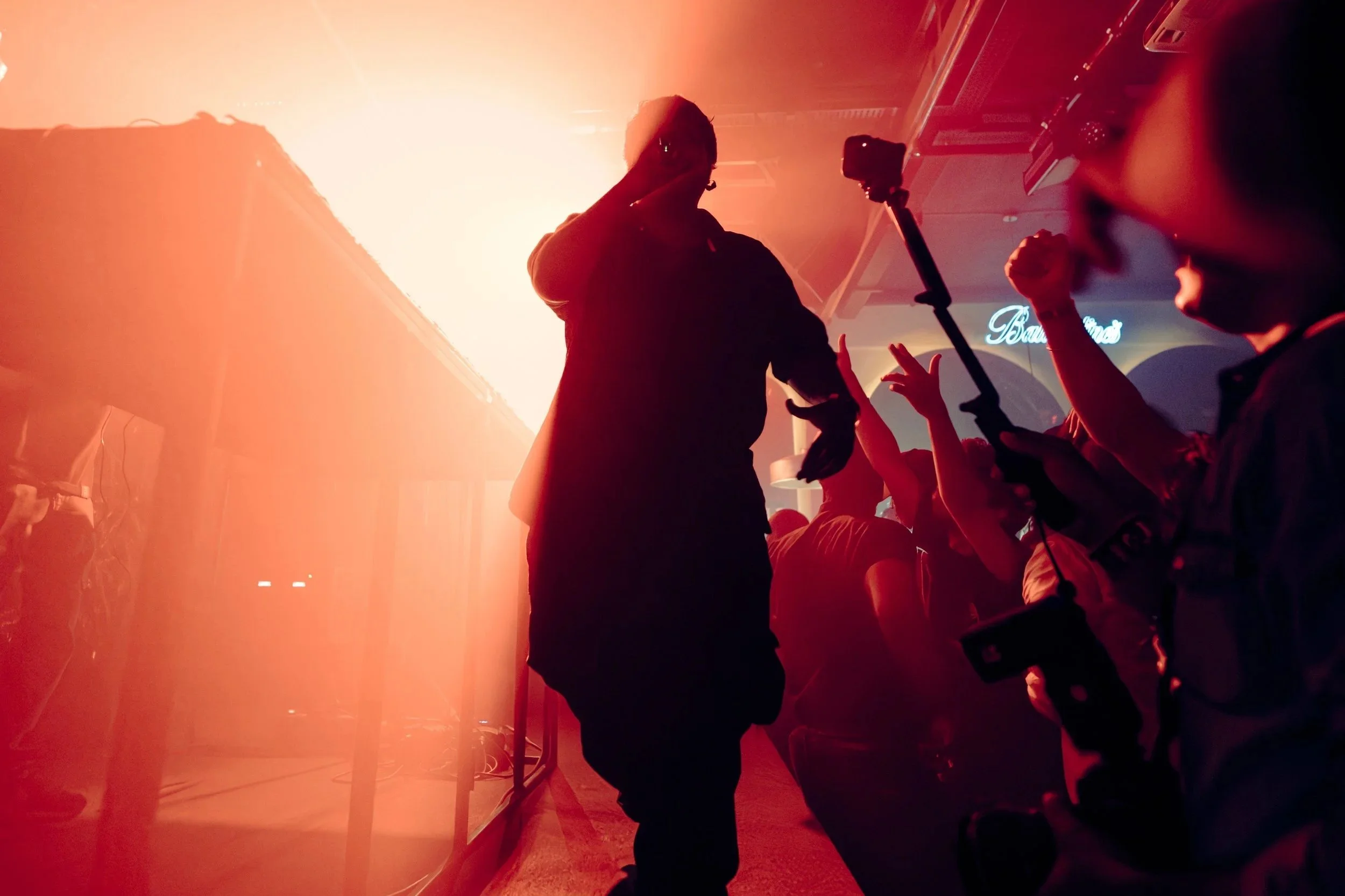
At Conduct we really resonate with the concept behind the Right to Dance movement. Can you tell us a little more about that?
As BamBoy I also play a Roadshow set, a special set where I play our local soundsystem music, which is full of folk, tribal and regional music with Indian percussion, string and wind instruments fused with modern electronic sounds. And of course only social and political music, music that represents our cultures, music of the oppressed class, music that puts forward a message of humanity, love and oneness.
Our local street and folk music has never been part of any international music festivals or club culture here in Mumbai. Those spaces are occupied by upper-caste and upper-class people who shape the narrative of what is accepted and considered good music.
When I started going to live music events I could clearly see there was no space for us on the dancefloor. I see everything through a caste lens, that's my reality. So it was extremely difficult to meet people from my social background in those spaces. The music I listened to and danced to was never considered elite by the so-called tastemakers.
Two years ago I played my Roadshow set at Boiler Room Mumbai. It got love from all over the world, but it didn't really change anything in the music industry here. After all the Boiler Room hype I got booked once to play that set in Mumbai. Then nothing for a year. People were asking me when the next one was. I had no answer.
So I just said: fuck it. I'll present it myself. I'll do a proper event that brings all the street, folk and tribal culture and sound under one roof. Something that dismantles the caste and class barriers from the dancefloor.
I always used to think how crazy it would be if dhol tasha, halgi, sambal, parai got played on a main stage. When would this elite music ecosystem accept us for who we are?
After years of facing profiling, discrimination and systematic casteism, Right to Dance was born. It was born out of struggle and necessity. The concept is simple: give a stage to the music and culture that is truly ours.
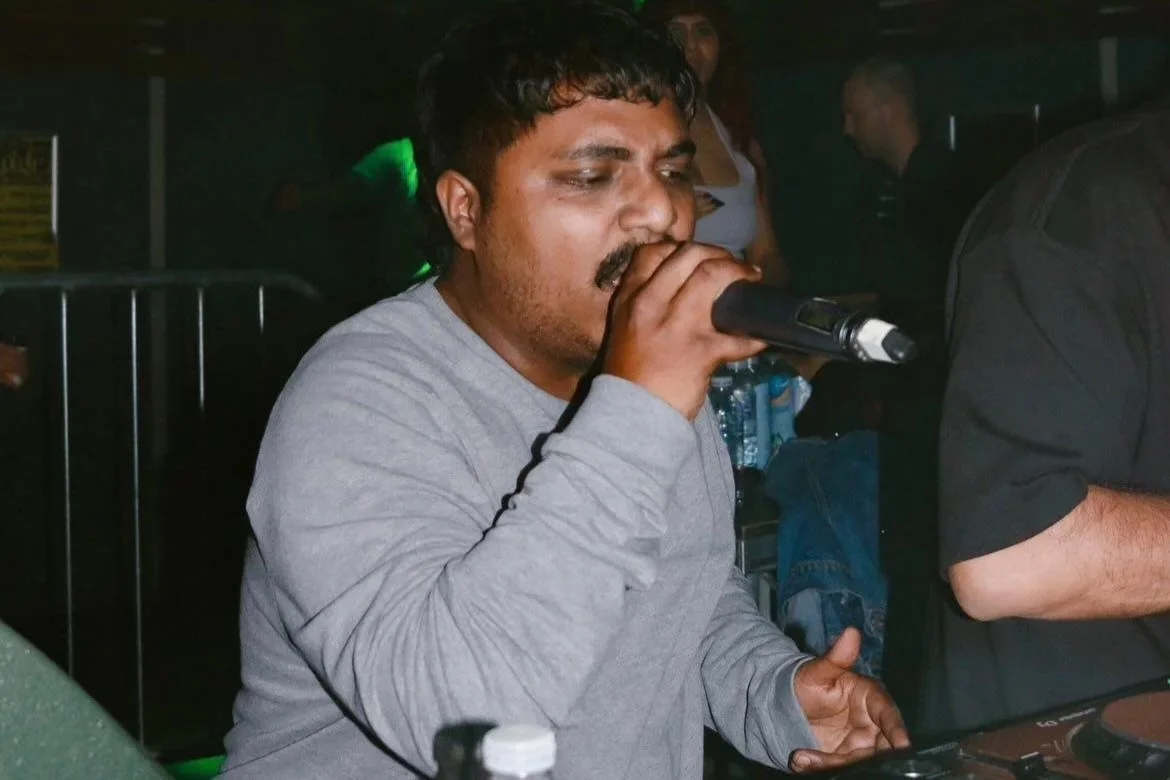
You're bringing in elements like Parai drummers into your events. Where does that connection to local culture come from?
My first connection to music was through our local music. Folk and regional music was always played at home and in my neighbourhood. Just like the Roadshow, we also have local bands, dhol tasha pathak, playing on the street during religious processions, festivals, weddings. Local bands are booked to celebrate all victories, achievements, new beginnings. At times like those, the streets were our dancefloor.
As a kid I would dance whenever I got the chance, or just watch the musicians. I used to play the dhol with my friends.
This is people's music. The people playing it and the people dancing to it all come from the same place.
The core of my musical journey will always be our local and regional music.
Alongside BamBoy, you also operate as Kaali Duniya, producing dubstep and playing alongside artists like Kahn, Mala and Hypho. How does that side of your identity differ from what you do as an MC?
As Kaali Duniya I produce and play dubstep, dub techno and 140BPM music. This is where I get to go deeper.
My work as Kaali Duniya is also social commentary, just like my work as BamBoy. I've been producing under that name for almost a decade and it feels like I've only just started.
You've also been building Low End Therapy. Where did that idea come from?
The idea came from a lack of opportunity and acceptance.
The existing scene was dominated by upper-class promoters and open format DJs. Only a few DJs would play my tunes. I rarely got a chance to perform in clubs or at festivals.
So I thought: let's start something of our own, where we can build a proper dubstep culture for our community and give a platform to producers who make this sound.
The name Low End Therapy is also a wordplay. The music we play is bass-heavy, full of low end. But we are also artists coming from the lower end of society, giving a sonic therapy.
Starting this community dance was a necessity.
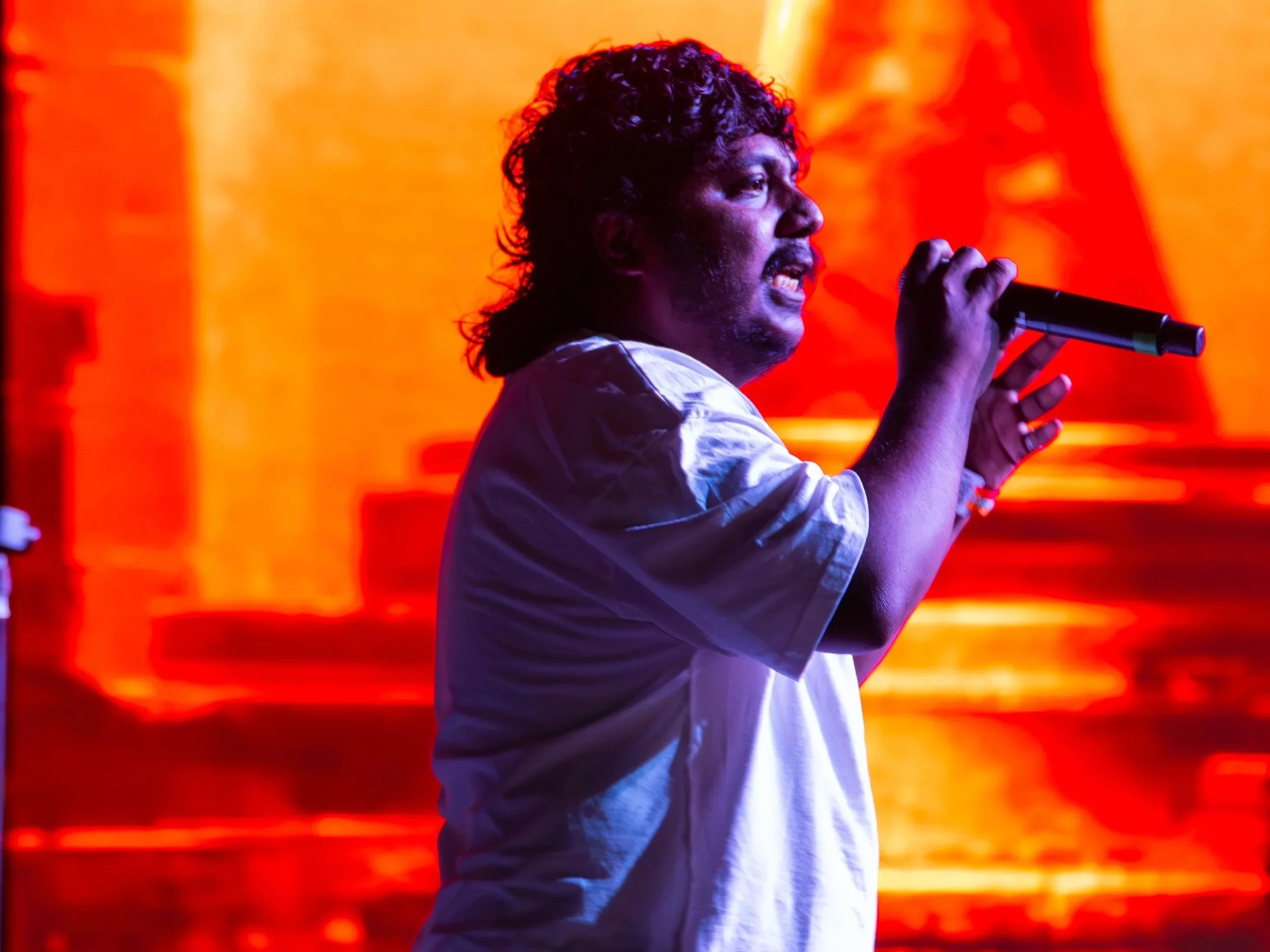
The concept of pricing tickets based on BPM is brilliant: 140 rupees for 140 music. What was the thinking behind that, and how have people responded to it?
I wanted our dance to be accessible to everyone, so the producer in me came up with this idea. 140BPM equals 140 rupees. It also helps me educate the audience about the music we play. Because the tickets are so cheap, people who have never been to clubs show up and get exposed to this scene for the first time.
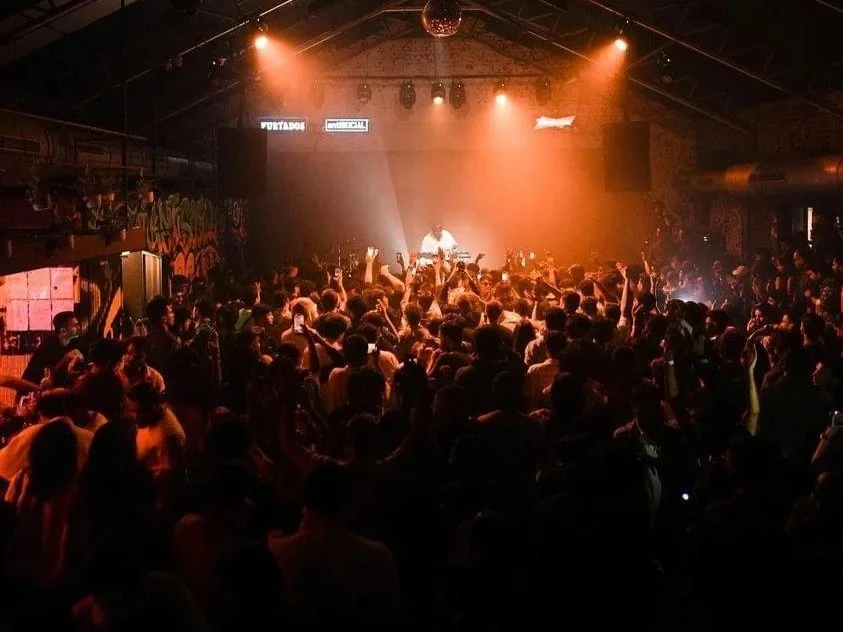
Our dancefloor has been packed since the first session.
People couldn't believe the tickets were 140 rupees flat, no shady cover charges, you pay 140 rupees whenever you arrive. At the first session the venue at some point stopped letting people re-enter and started cutting off the wristbands of people trying to leave. People gave away their bands, and others bought new tickets and came back in. Pure madness.
The first session was also picked up by GRM Daily and a few other UK outlets.
We barely get to do four sessions a year because there aren't many venues willing to support this concept. But I'm doing my best to host dances in different places. We're entirely dependent on the gate, whatever we make at the door and through online tickets gets split between all the artists and everyone involved.
The events are also a full audio-visual experience. I couldn't afford to pay the visuals artists so I taught myself how to do live audio-reactive visuals.
There's a strong community angle to both Low End Therapy and Right to Dance. How important is it for you to build spaces, not just perform in them?
Occupying and reclaiming spaces has always been tough for us. There is a reason we are called the socially depressed class.
When I perform in spaces dominated by upper-class and upper-caste people, I often feel I'm being used as a token.
By building our own spaces and platforms, I'm also able to share opportunities with the community, not just opportunities, but ideas and concepts that can help us all grow together.
Me and my crew have been performing for over a decade at multiple venues and festivals across India. And I've seen, consistently, that there are very few, sometimes no, people from marginalised communities on the dancefloor. They might be working as bouncers, cleaning staff, waiters. But never in the audience.
By building our own space, I believe we can annihilate class and caste from the dancefloor.
You've been running Low End Therapy for a few years now. What have you learned from building something from the ground up?
The first thing I've learned is that you have to help yourself and the people around you if you actually want to build something together.
There will always be gatekeepers. But there will also be people around those gatekeepers who will help you, if they believe in changing the system and if they believe in you and your vision.
Things will not change overnight. It requires patience, dedication and commitment. Making music is not enough. I've had to develop my social skills in order to make things work for me and my people, which I'm still working on, and it is exhausting, because you end up in spaces where you don't fit in. To build a platform you have to be willing to go out and meet the right people.
The most important thing is making genuine connections. Making friends with whom you can actually be yourself. Friends with whom you can discuss ideas.
I've also learned that people crave experience, but even their idea of what a music event experience should be has been hijacked by international IPs and shaped by a system controlled by people who look down on those of us from the margins. It is necessary for us to change that narrative and build a dancefloor full of conscious minds.
BAMBOY is not waiting for permission. He never has. Low End Therapy, Right to Dance, Kaali Duniya, the roadshow, the 140 rupee door charge. Every part of what he has built is a direct response to a system that was never designed to include him. The remarkable thing is not that he found a way through. It is that he is building a door for everyone behind him.
